
Review: Rhell: Warped Worlds & Troubled Times
So, I don’t know if you’ve noticed, but a lot of games come out these days. Here at IndieLoupe we’ve set ourselves the achievable task of covering just one of those per week, but this week more than most, that’s presented something of a challenge, because there’ve been a hell of a lot of interesting-looking games released over the last five days. From Pluto to Pizza Slice, from Piece by Piece to… Piece by Piece (yes, there were two games released with the same name within three days of one another), there were a lot of options to choose from. I almost decided to take the easy option and just put out an article highlighting all the games that came out this week, but there was one that just – and I mean just – piqued my interest a little more than the others.
Perhaps if I’d been in a slightly different mood when looking at them I could’ve gone another way, and you’d be watching a review of an entirely different game right now, but man am I glad that I gave Rhell: Warped Worlds & Troubled Times the nod ahead of the other possibilities.
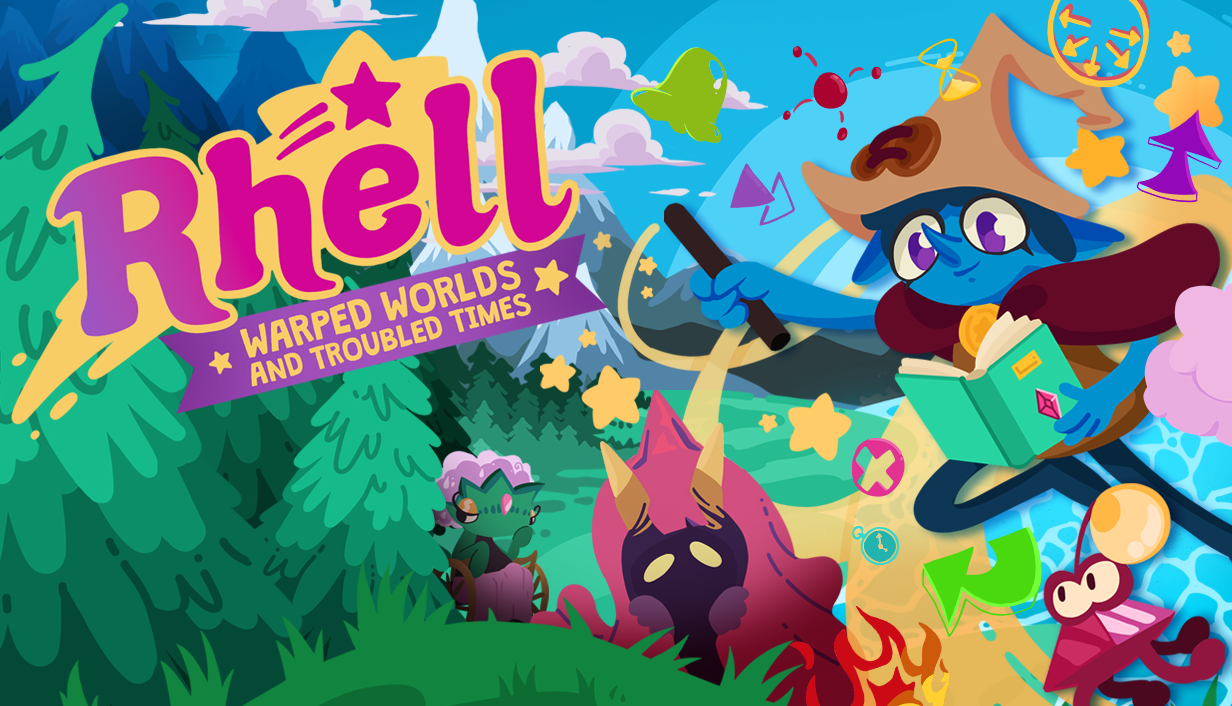
Image: SlugGlove, Yogscast Games
-
Developer: SlugGlove
Publisher: Yogscast Games
Release: 12 March 2026
Retail Price (Steam): 13,99€/$14.99/£11.99
Rhell: Warped Worlds & Troubled Times is the first paid release from solo-dev SlugGlove, published by Yogscast Games. You play as the titular ‘Rhell’, a sage – this world’s magic users – who is one of only a dozen people who remain in the world. The rest have been sporadically disappearing: there one moment, gone the next. With the way things have been going, it’ll only be a matter of time until everyone has vanished completely.
Rhell is blissfully unaware of the fact that all of this is unfolding, as she’s been locked away in a dungeon, for reasons unknown, since before the disappearances had begun. That’s probably where her story would’ve ended, if not for the serendipity of a magical book dropping out of a broken pipe, squarely onto her head.
That remarkable stroke of luck is somewhat dampened by the fact that the book is almost entirely ruined: it’s designed to hold 40 runes-worth of pages but instead it comes with only 2, with the other 38 strewn across the world for Rhell to find. To start with, she’ll have to make do with only the push and rotate runes, slowly building up her catalogue while attempting to investigate what’s happened to all the missing people.
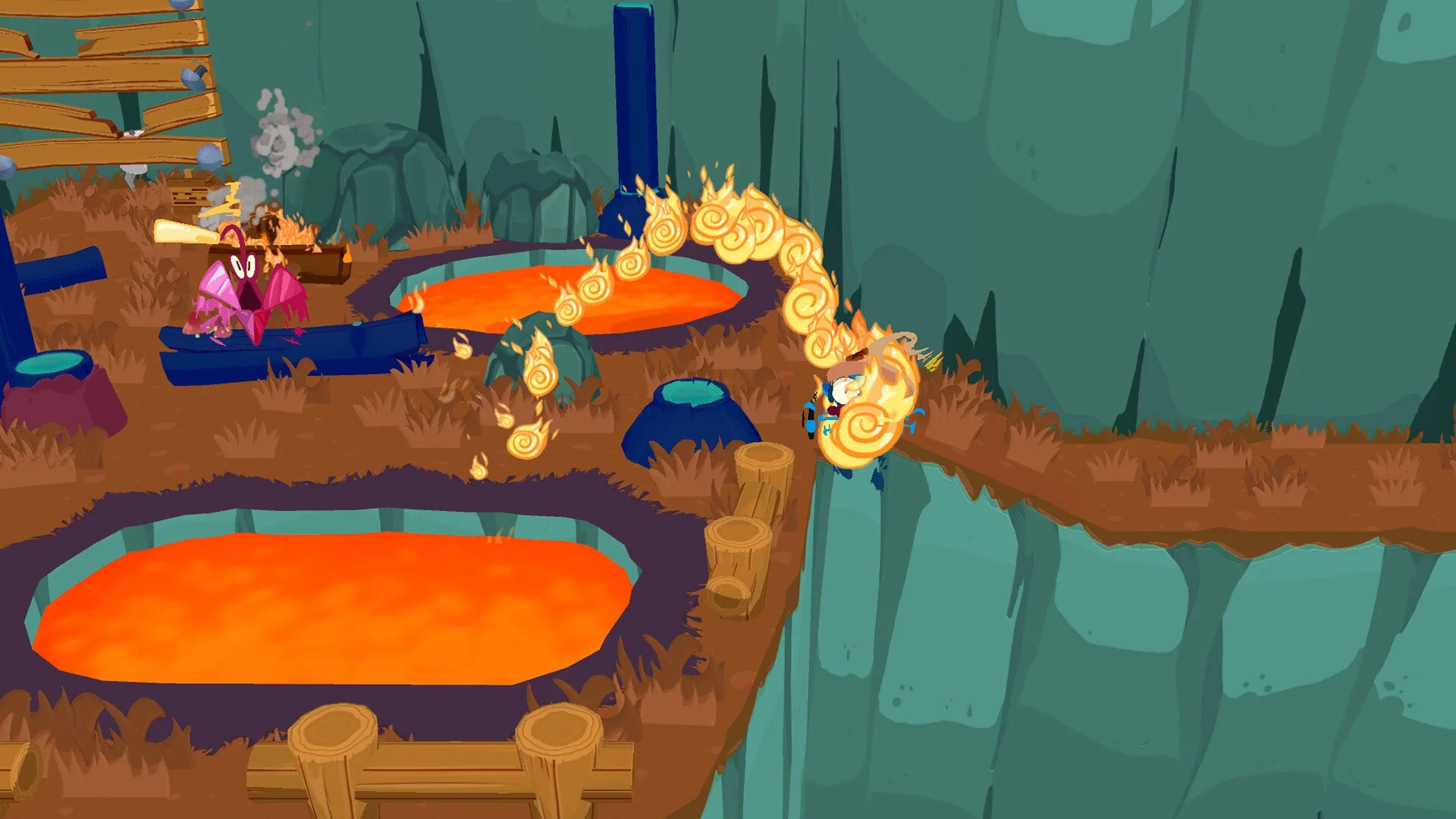
Image: SlugGlove, Yogscast Games
Those runes are the selling point of Rhell: the reason to be interested in it, the reason to play it, and what I’ll spend most of this review talking about. Yeah, the art is cute, the story interesting – not to undersell those, because I think if SlugGlove had made a more run-of-the-mill puzzle adventure it would still have promise – but that rune system was the driving force behind my eagerness to try this game out.
To create your spells you pick up to five runes, although it can just be one on its own, and combine them to do… well, pretty much whatever you can think of within the bounds of this game's magic. That can be very simple: using just those two starting runes as an example, a spell with one push rune will push an item a little bit, a spell with five will push it a lot; one rotate rune will make something shift 90 degrees, two will make it shift 180; a rotate rune and some push runes will simultaneously make it rotate and push it away. That’s all straight-forward enough with two runes, but the possibilities quickly stack up as you unlock more.
The game is advertised as having 102,400,000 combinations — but that’s only accounting for the 5-rune combinations, so there’s actually 105,025,640 combinations. There is some cross-over, from things like a push rune and a pull rune cancelling each other out, but much less than you’d think. And look, I will admit I was a little sceptical when hearing about that, because on paper, while it doesn’t call itself one, it sounds like the most immersive of immersive sims – but find they rarely live up to their promises.
To step away from Rhell for a second, one of our Top 10 games last year was Skin Deep, which was good fun (obviously, I put it in my top 10) but the main issue I had with that game was that almost every problem I encountered was solved in pretty much the same way – there might’ve been other options (though not, I hasten to add, 100 million of them) but even then, when one was far more efficient and easier to pull off than the others, I kept reverting to it.
There are two other games that are perhaps more thematically in-line with Rhell that came to mind when playing, which had a similar problem – call it the ‘Scribblenauts Snag’ or the ‘Magicka Misfortune’ – maybe I’m revealing some fundamental lack of creativity, but it feels like nine times out of ten you could use the same item or spell in those games to solve whatever they threw at you.
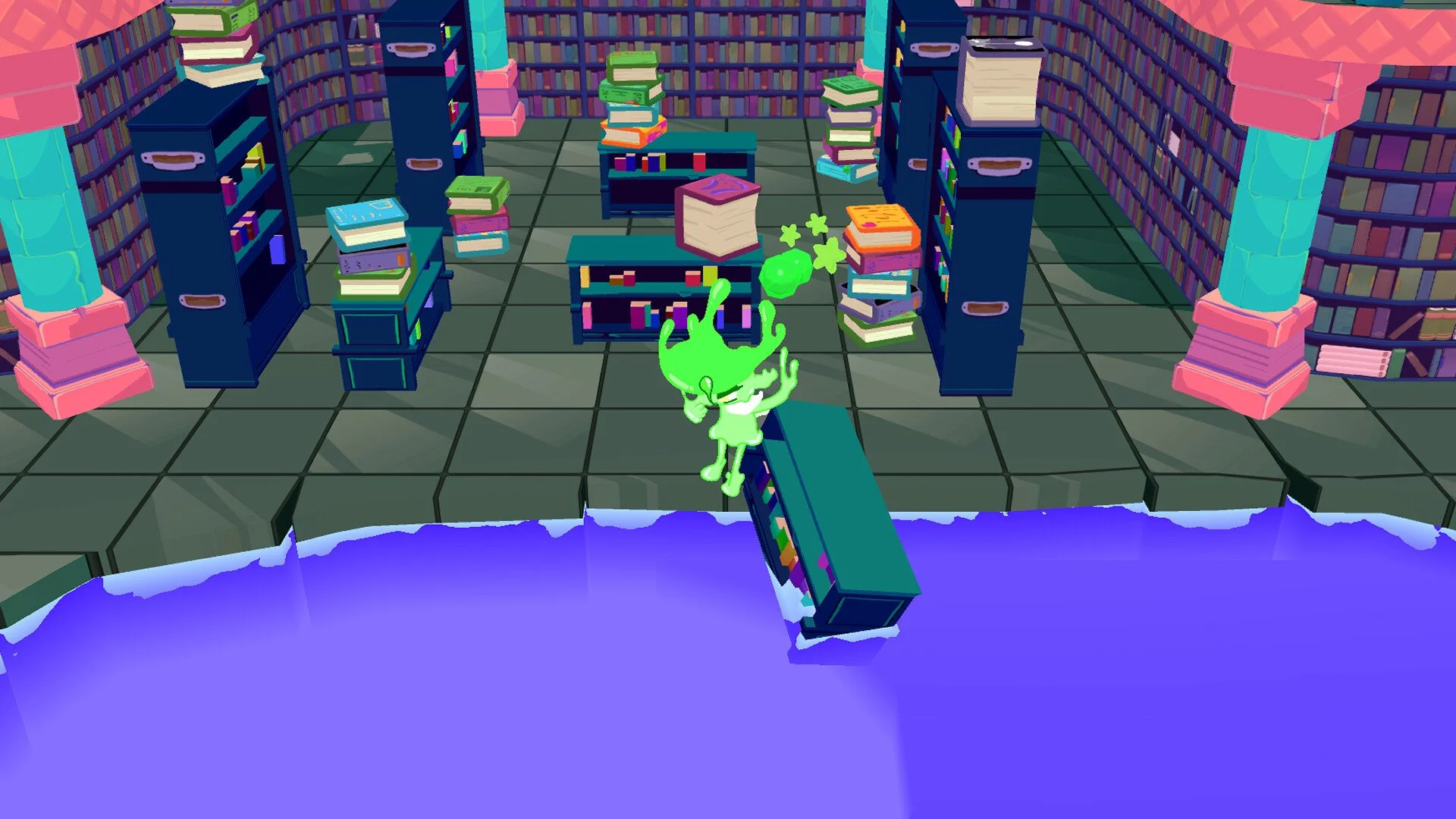
Image: SlugGlove, Yogscast Games
That combination doesn’t exist in Rhell; while each puzzle has many solutions, one solution can’t be used for many puzzles. I won’t pretend there wasn’t a three-rune combination I proudly came up with and fell back on a lot throughout the game, but it was nothing close to a catch-all – it helped in a lot of situations, but I’d still need to use other methods to solve the overwhelming majority of puzzles. I’m keeping that combination secret, not to be proprietorial (well maybe a little bit) but mainly because I think that would, in a way, be worse for your enjoyment than, for example, spoiling the game’s whole story.
The biggest joy that Rhell provides is from finding your own solutions to problems; I’d probably had those three runes for a couple of hours before I thought to put them together, but they’re, I think, a pretty niche interaction. I imagine most people will go through the whole game never thinking to put them together – and that’s not because I’m oh-so-clever for figuring it out, but just because they’re so many potential combinations and ways to do things. There’s almost certainly a better way to do… the thing that those runes were doing for me, but that was my spell, the ‘IndieLoupe’ way of doing things.
I suppose it’s only fair that I give you at least one example: there was a door one time that I wanted to get through, when my book was about half complete. If you went close to the door, it slammed shut. I can think of a lot more ways I could do it now – there was, in fact, a much easier way to do it there and then – but my solution was to wedge a cushion into the door from afar. Fine, it’s stuck open now, but the gap was still tiny. There’s a shrink rune, but I didn’t have it at the time. What I did have was the slam rune and the area rune, so I combined those to make an area that slams things down when they enter it. I sent Rhell into it, she got squished down, and there we go, she was small enough to fit through the gap.
That’s one door, one decision the player makes, with dozens of legitimate solutions before you’d get into the domain of doing things in a ridiculous way to prove a point. I have no idea how SlugGlove meant for people to get past that door, but I think that’s fascinating: if there’s that many ways to approach a door, I’m sure you can imagine how creative you can get with more complex situations.
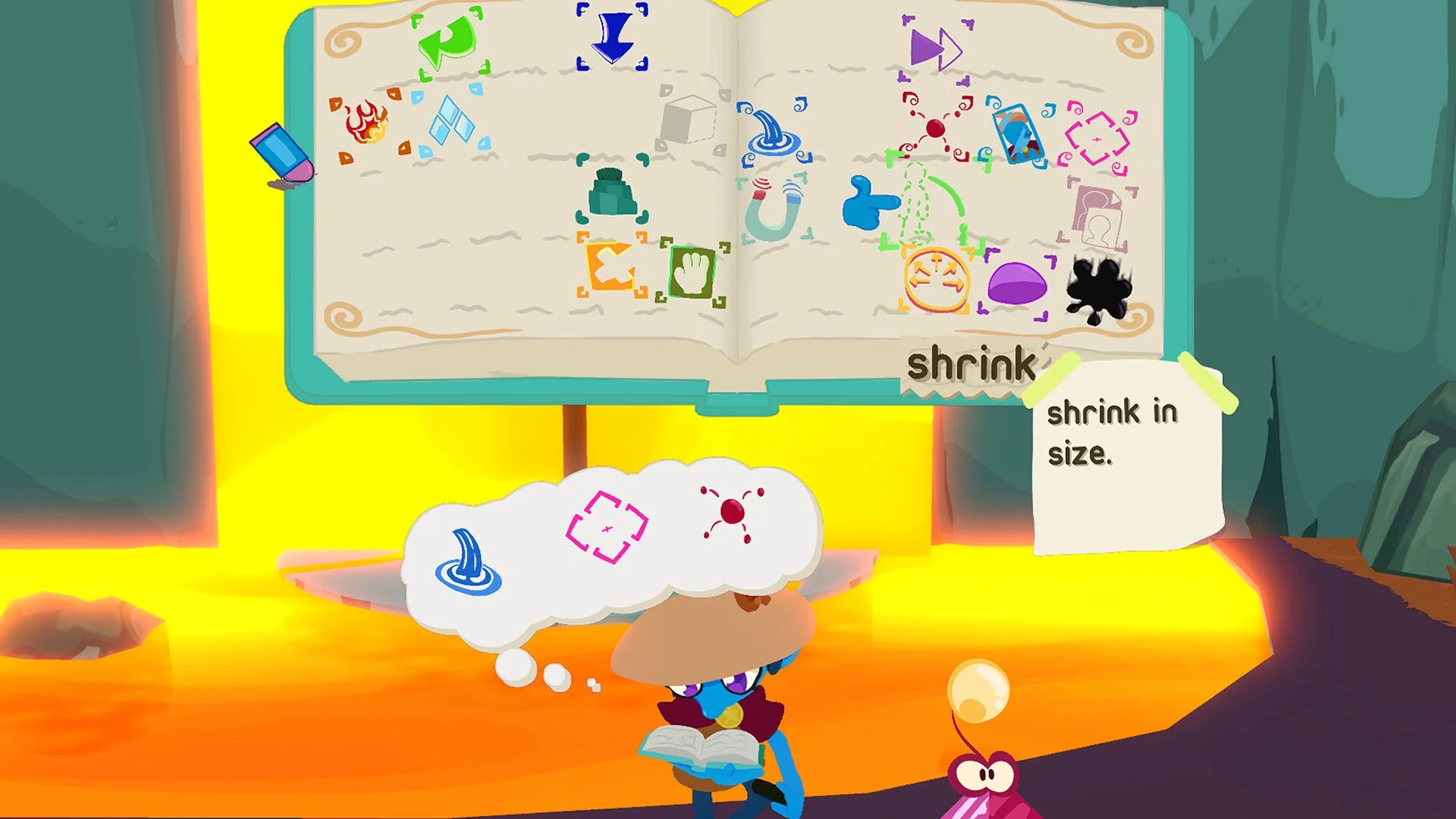
Image: SlugGlove, Yogscast Games
The game describes itself as ‘semi-open world’, which I think is doing itself a disservice: I found it to be about as open world as it gets. It did take me a little while to warm up to that: in a way, it was actually something of an issue for me at the start of the game – there were so many places to explore, and not a huge amount of guidance in terms of which direction I should do that in. There was only one time I can recall the game telling me ‘no, stop, not this way,’ but even that wasn’t a hard roadblock, and due to the nature of the game – the implied aim being to solve problems as creatively as possible – if anything it had the opposite effect on me, making me even more determined to prove I could push on, current lack of runes be damned.
Due to that openness there was also one time I couldn’t find a location for the life of me, and that was frustrating, but I eventually gave in to exploration and ended up finding it through, quite literally, the back door. In doing so I realised I had been to the more conventional entrance earlier in the game, but hadn’t figured out how to solve the puzzle to get into it – I still haven’t figured that out, as I opened it from the other side.
That does make part of me want to play the game again, and to try and access areas in as daft an order (and as daft a way) as possible, to really push the boundaries. To that end, there’s actually a really interesting game mode where the game’s 500 items are in randomised locations, which, having played about fifteen minutes of, I imagine can lead to some bizarre interactions, particularly on account of the order you might end up getting runes in.

Image: SlugGlove, Yogscast Games
But before any of that, I’ve only found two of the games three endings, there’s those 500 items to find which I’ve made a decent dent into but not quite completed, and two different sets of challenges available – one in-universe with 40 puzzle rooms, where you’ve got access to your spellbook as it is in-game, and another set of (currently) 19 standalone puzzles accessible from the main menu, but this time with only particular runes unlocked. I’ve already played over 20 hours and barely scratched the surface on either of those sets of challenges, but I’m sure I will get round to all of that – I actually wanted to get this article out earlier in the week, but delayed it largely because every time I sat down to finish writing this article, I got pulled back in – telling myself I’ll just do one thing here or there and then spending another four hours straight in the game.
That is the second best indication I can give for how much I’ve been enjoying Rhell. I’ve got two games I want to review for next week; I’ve written 31 words on one of them and not played a single minute of the other. Rhell hasn’t let me. The best indicator I can give is pointing out that the dialogue in this game sometimes looks as though it’s just been smashed out once and never examined again, in terms of weird capitalisations and typos being commonplace, yet I, the stickliest of sticklers for that sort of thing just... didn’t care. Didn’t mind. It felt authentic, and right for the whimsy of this strange world. I guess that’s the criticism but… I don’t think I’d want it changed.
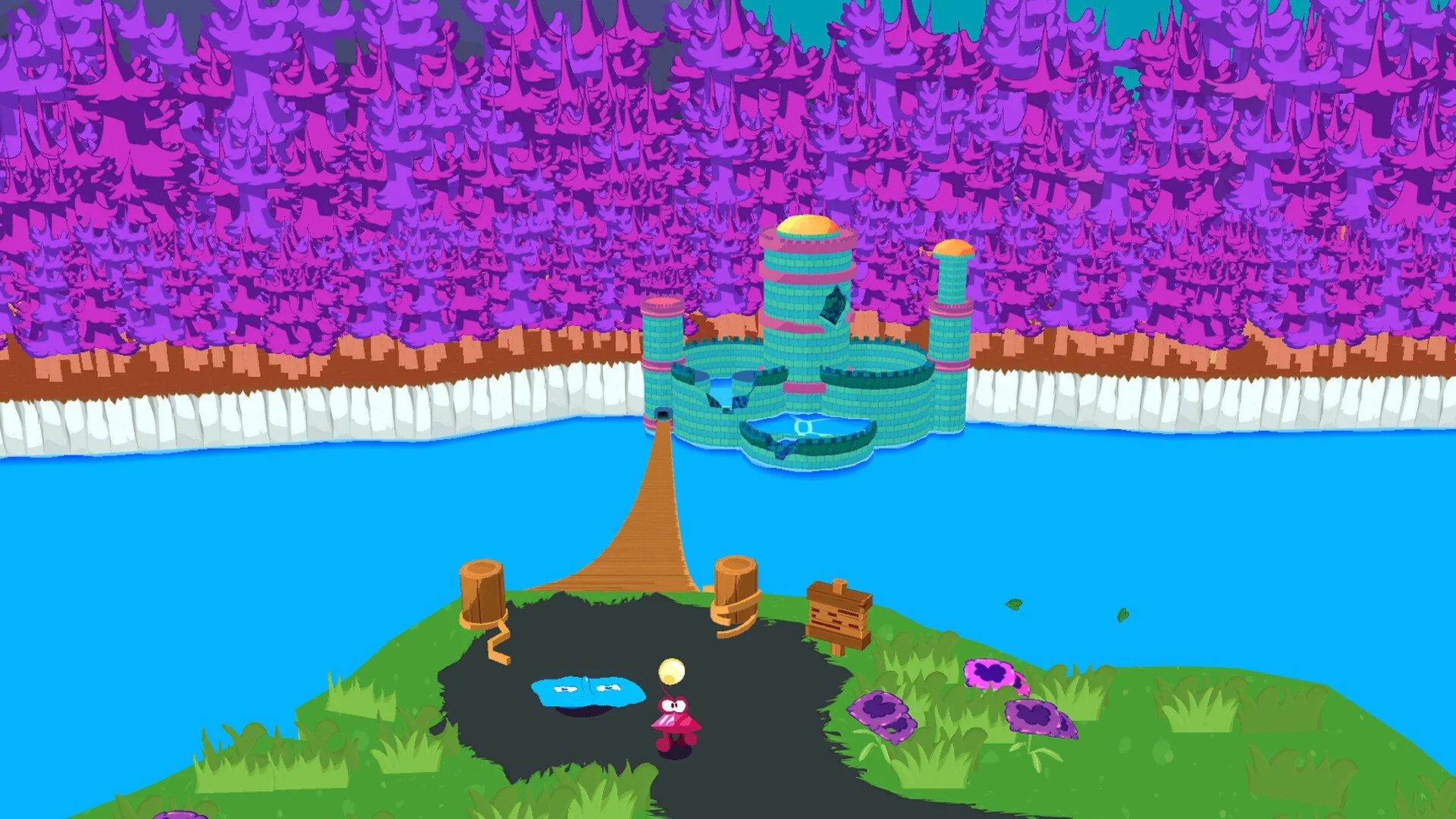
Image: SlugGlove, Yogscast Games
I’ve been blown away by how much I loved this game, how creative it is, and by just how much of it there is. I could say a lot more on it – maybe I will one day – but for now I’ll leave you with a heavy recommendation.
Rhell: Warped Worlds & Troubled Times is awarded a 9/10 by IndieLoupe.com.
The reviewed product was provided on behalf of the publisher.
