
Review: Imago Season
I stumbled across Imago Season from solo developer Lunar Finch while busily procrastinating from writing a video essay on another of this year's Disco-likes, Esoteric Ebb, so I've been thinking about this fledgling sub-genre a fair bit recently – enough that I've come up with a handful of tenets for what I think makes a Disco-like, Disco-like. For the uninitiated, that's games which share similarities with (or take inspiration from) ZA/UM's 2019 hit Disco Elysium. Imago Season has been out for just under a month and certainly falls into that category, though perhaps not quite as solidly as other recent titles.
-
Developer: Lunar Finch
Publisher: Haunted Publishing Syndicate
Release: 11 June 2026
Retail Price (Steam): 9,75€/$9.50/£8.50
It might be slightly redundant, as an eye test is almost as good, but I'd argue the key features of any good Disco-like are the lack of complex combat systems (arguably the lack of combat altogether). the text-heavy, right-hand-side dialogue window, and dialogue options – or skill checks – which involve rolling dice against your character's attributes or abilities.
Visually, though, they're almost exclusively from the same isometric perspective, enough that I'd say it's another one of those unwritten rules, but Imago Season breaks that, instead replacing it with first-person exploration, to mixed success – more on that later. Narratively, there are also some themes present from Disco Elysium that seem to reappear fairly often in games derived from it: namely political commentary – here that's admittedly quite soft – and that ever-reliable trope: the amnesiac protagonist.
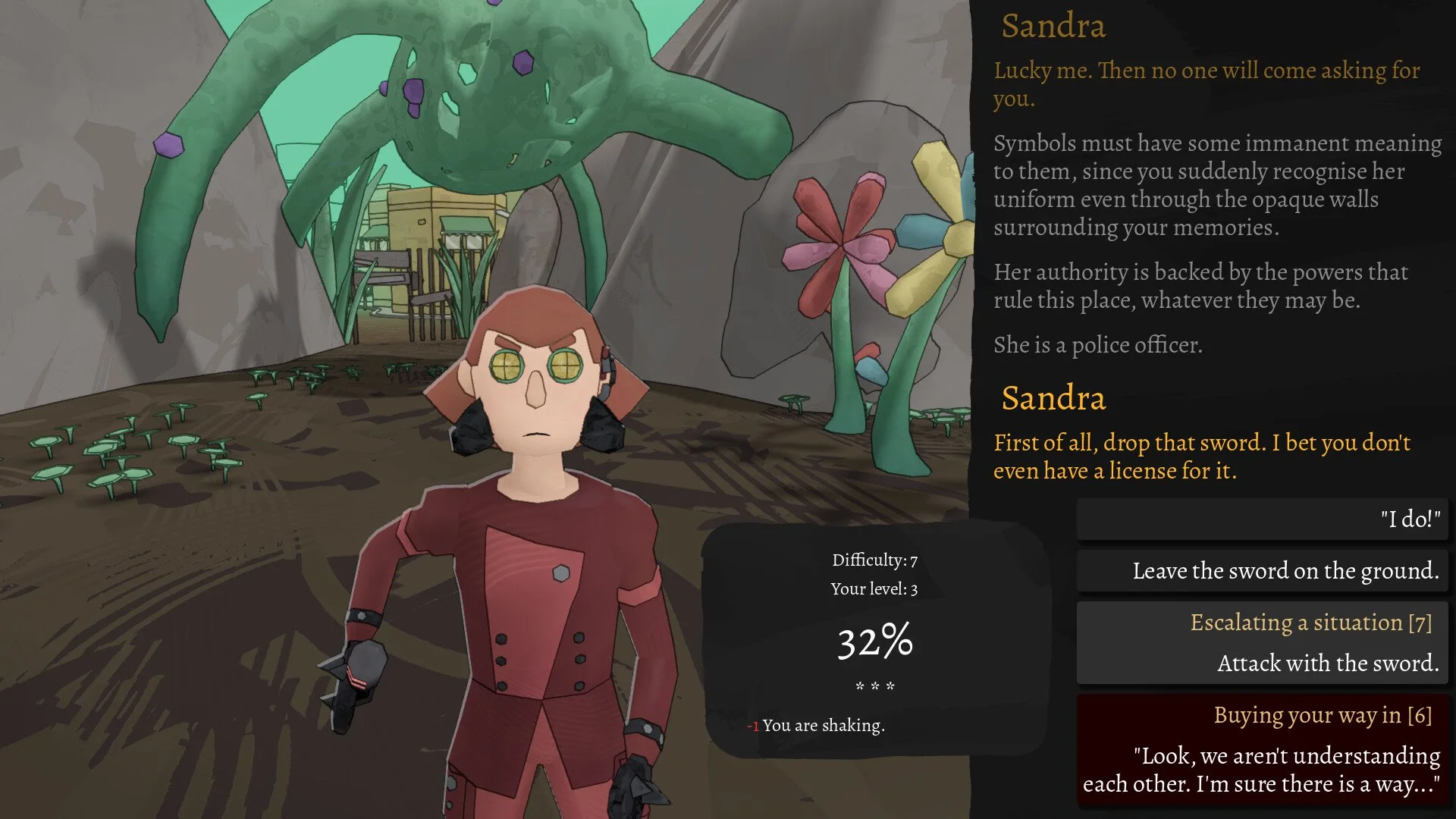
Image: Lunar Finch
The cause of that amnesia is a little more out-there than in similar titles, you've not drunk yourself stupid or fallen into river or suffered a dissociative episode (whatever the hell that means) but instead have been spewed out into the world via a suspicious-looking meat sack, apparently unfamiliar with what exactly it is and how exactly you ended up inside it. While in there you'll design your character: there's a nice amount of physical customisation, but the real stars of the character creator are the game's excellent, bizarre, skills. There's no Strength or Intellect or Charisma here, instead your five abilities are: 'escalating a situation', 'diverting attention from yourself', 'buying your way in', 'catching a curveball' and, my absolute favourite and one which I will petition every game to have in it going forwards: 'putting up with something'.
After a small amount of putting up with something in the cave you've found yourself in, you emerge to find the first three citizens of the City State of Tempura, where the rest of the game will take place. You, and indeed your character, will immediately notice that two of these people have features that are more than a little unsettling – 'you might have done some irreparable damage to your memory, but you are reasonably sure that humans do not look like this.' You'll soon learn that that's par for the course in these parts, except for the youngest characters you encounter, everyone in Tempura has some level of mutation, ranging from antennae to eye stalks to… just absolutely everything. Eventually you yourself can choose to undergo such changes in order to increase your skills – as meek as you might start out, let's see them try to stop you from escalating a situation when you've replaced your arms with the largest pair of pincers on the planet, what curveball could they possibly hit you with when your eyestalks provide 360 degrees of vision, how could you not be an expert at diverting attention away from yourself when you look like this (image below).
If you're boring – the sort of person who plays a human in World of Warcraft – you can, apparently, choose to go through the game without any adaptations. Quite how, I'm not sure, as I certainly needed them to pass some of the game's seemingly-necessary skill checks, but the option is there should you wish to give yourself a significantly bigger challenge, but keep your humanity intact.
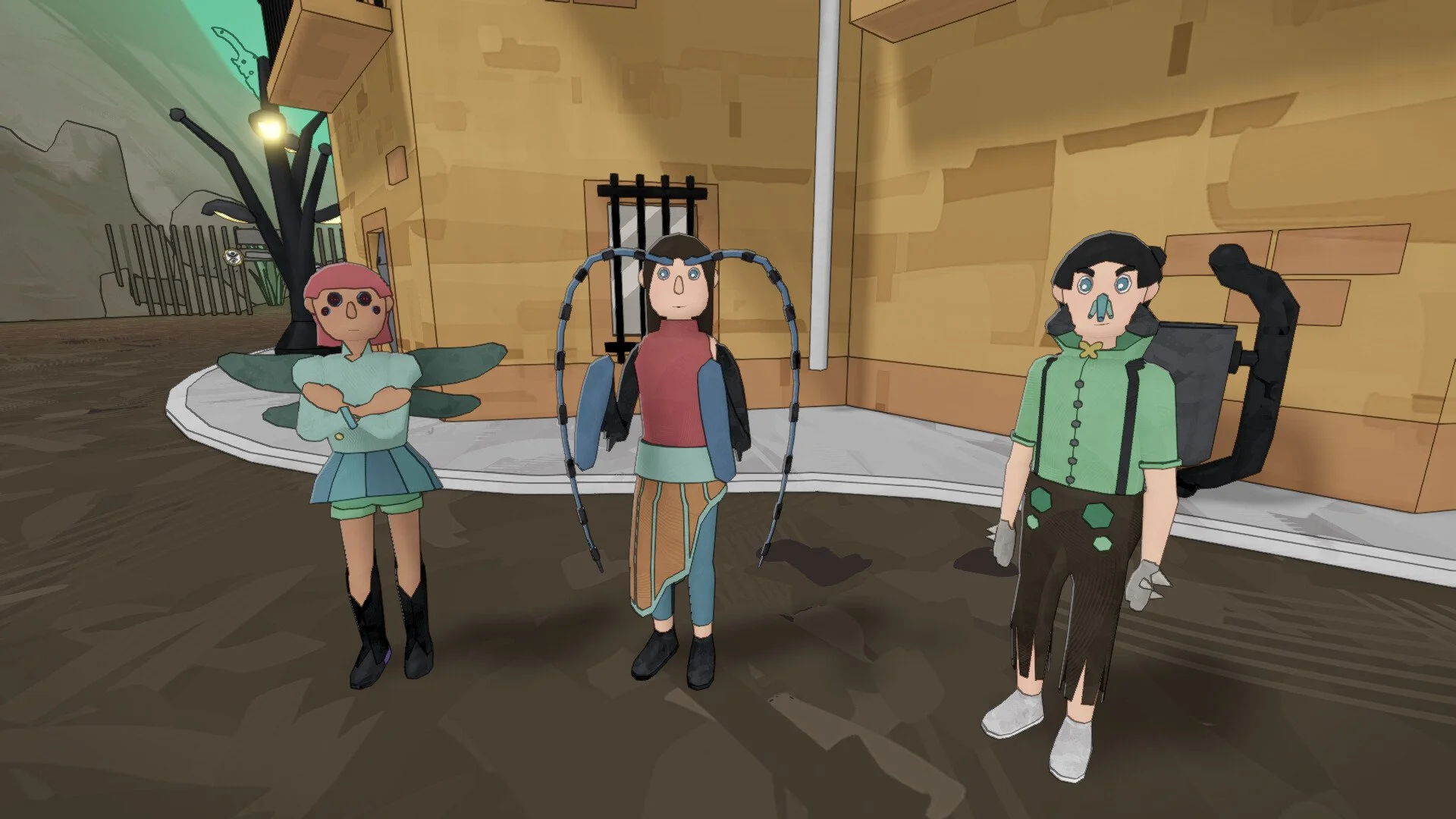
Image: Lunar Finch
As it happens, humanity – that's if you're counting human-insect hybrids as truly human – is not the only force in Tempura, which you'll quickly discover has recently undergone something of a regime change. The previous overlords were the Union Universalis, a seemingly-benevolent alien alliance, but any evidence they were ever around has been dramatically removed, with embassies reduced to rubble and ambassadors either arrested or on the run. In the Union's place are the Liberated Coalescence, artificial… well, not exactly lifeforms but sort of lifeform-shaped. To borrow a fairly-accurate description from Doctor Mariela (a heavily-metamorphosed physician who’ll be the one operating on you, should you wish to have your own adapations) they're hard-working, fun-agnostic tin soldiers. Still, for the most part they seem keen enough to get along with the citizens of Tempura, albeit with a handful of tensions bubbling up when it comes to knowing what's best for the people, some of whom clearly disagree with the new world order.
Those tensions form the basis of the game's story, with players interacting with characters sympathetic to each of the three factions – the alien Union, the robotic Coalescence, and those who'd rather have nothing to do with either. That's where the game's politics come into play, though in a way that feels less overbearing than in the likes of Disco Elyisum or Esoteric Ebb: I wouldn't say there are clearly defined distinctions where the game's factions explicitly follow a particular ideology. That ambiguity works well for Imaaaago Season, where, when deciding where your own sympathies lie, you aren't being boxed in by real-world political leanings or led by the game to side with the people who are quite obviously the 'good guys'.
While that overarching conflict provides the lion's share of what players deal with, there are also a handful of minor threads to follow – small sidequests that aren't going to change the world but mean something to that one character, and those might be my favourite parts of the game, as they really do breathe life into Tempura.
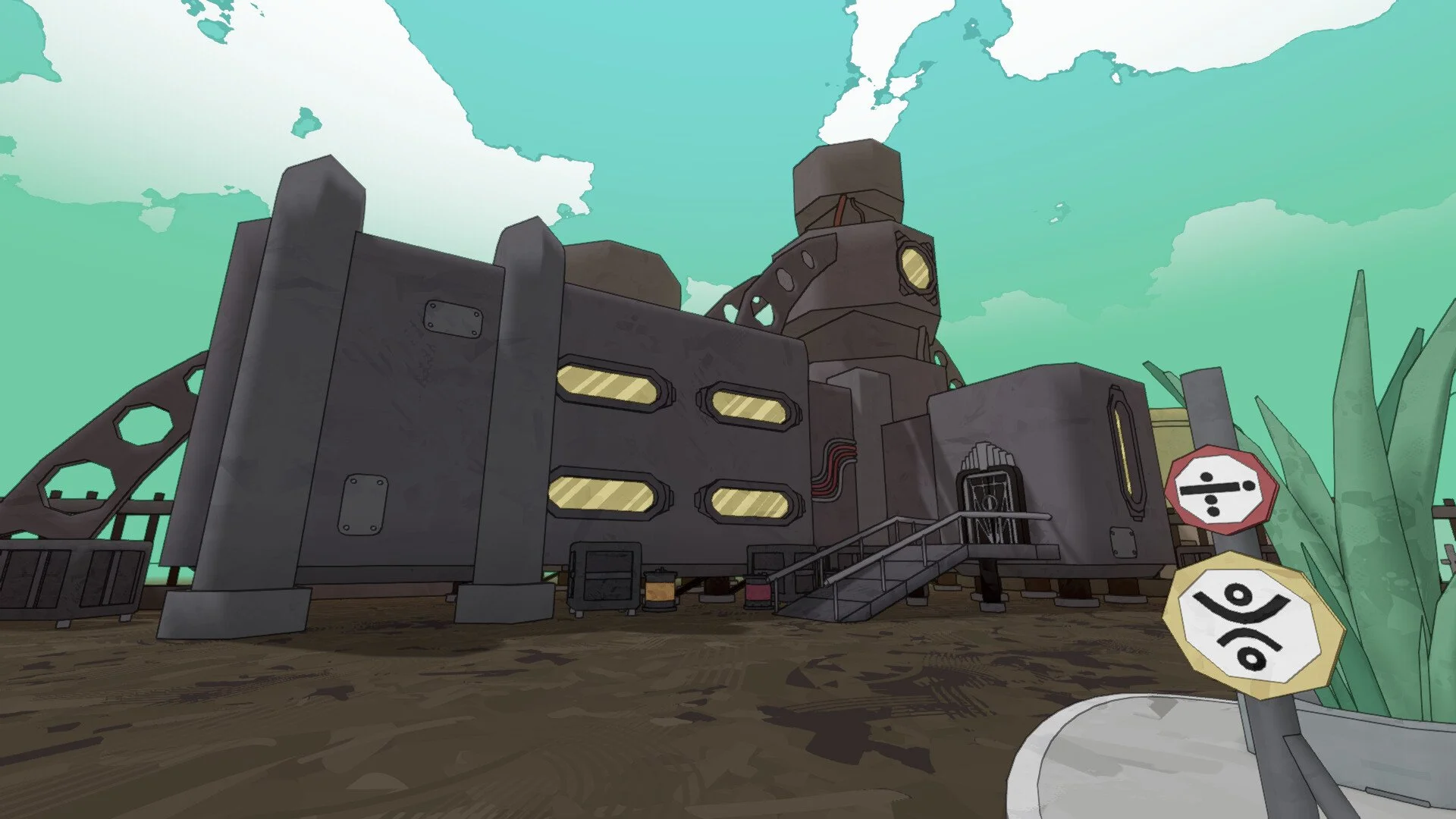
Image: Lunar Finch
That's particularly needed due to the first-person exploration that I mentioned earlier, which you might recall I said was executed to mixed success.
While playing, it's difficult not to compare to other Disco-likes. I know I've already done a fair bit of that, but I think the world does feel a little emptier here than in other games in the genre. While part of that is on account of the game's smaller scale, I think the perspective also contributes a lot to that: save for a handful of scenes in those other titles, their worlds aren't actually that populated either, you're often walking around large areas with just one or two other people to be seen, but that's a lot easier to ignore when you're not getting down and dirty and looking at the world through the character's own eyes.
With that said, it does offer the game something unique and allow players to interact with the world in a way unlike any of its contemporaries. I'm a big fan of the art style, which would only really work in that first-person view, where you can properly appreciate it. Obviously it's designed with that in mind, and I'm sure the aesthetic isn't for everybody, but everything feels well-considered, and its inherent quirkiness feels incredibly appropriate for what is ultimately a pretty quirky game.
When looking at the arguably small details, I think there's a genuine beauty in things like the way the colours of the buildings in the distance fade out while their silhouettes remain, really selling the idea that you're on an alien planet with a dense, unfamiliar, atmosphere. And there's loads of stuff like that – if it wasn't already clear from everything I've said so far, the whole thing oozes creativity, right down to the menus zeroing in on various internal organs as you scroll through them – brain for settings, heart for inventory, lungs for skills... because, well, why not?
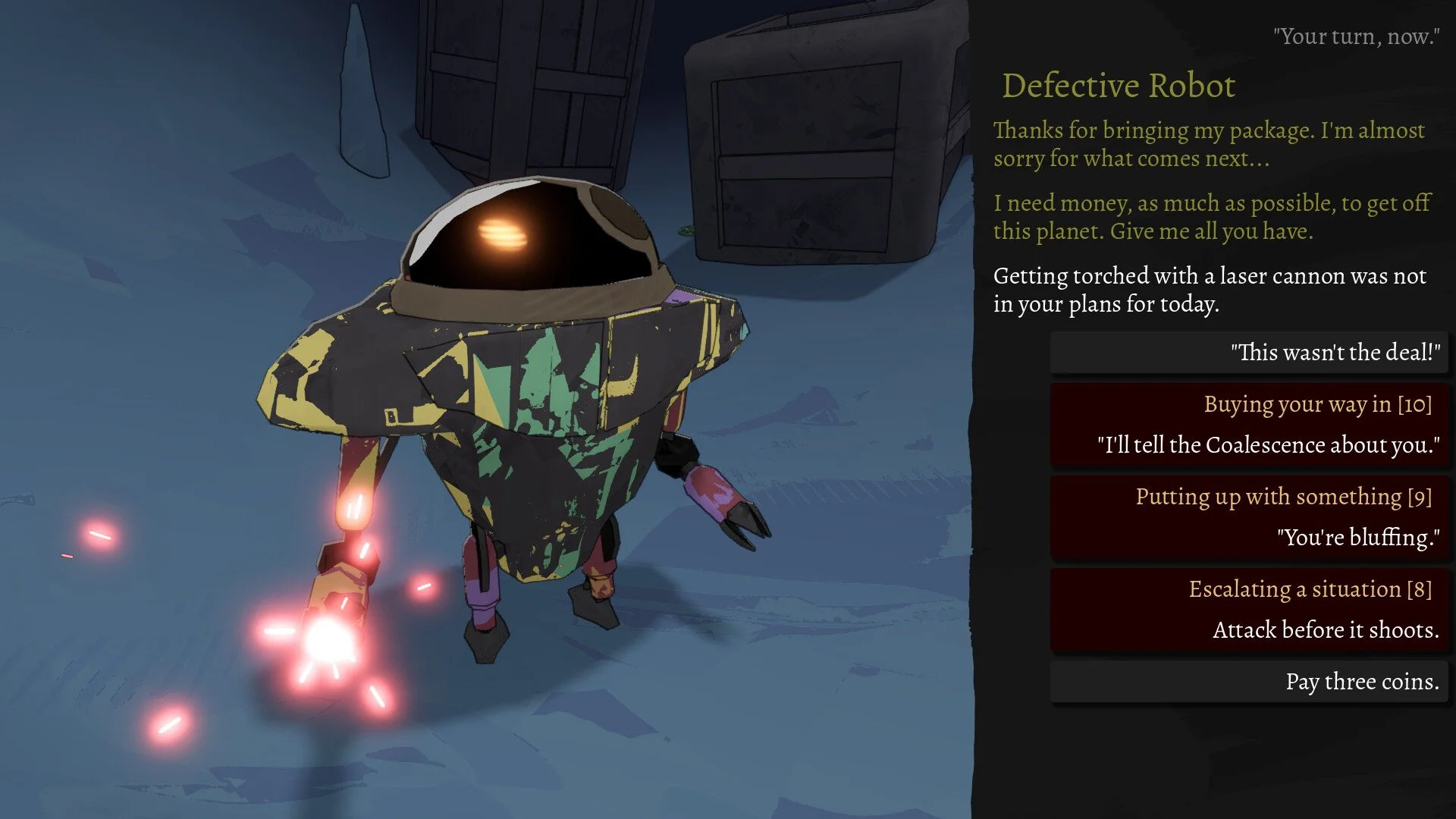
Image: Lunar Finch
If I had a complaint it would be that it would have been nice to get to know the world and its inhabitants a little better – for their plotlines to run a little deeper, for their motivations to be explored – but given the whole thing is designed, programmed and written by one developer I think it's only fair to temper expectations somewhat. I feel like I got through things relatively quickly and it still took about three-and-a-half hours to complete, so it's perfectly respectable in terms of value for money, though it does feel ever-so-slightly like a proof of concept, or an extended prologue for something much larger… but one that's absolutely worth playing and which deserves much more attention than it's received so far.
Imago Season is awarded an 8/10 by IndieLoupe.com.
The reviewed product was provided by the developer.
