
Review: The Incident at Galley House
I'm not trying to get ahead myself here but if there was a genre (or sub-genre) that I'd claim to be an expert on – not the expert, mind, as far as I can tell that particular title goes to a cat in a fedora – it would be the somewhat vaguely-defined narrative deduction genre. Nowhere else will you hear those words 'narrative deduction' uttered quite as frequently as here at IndieLoupe.
Should you need some examples of such games, we're talking Return of the Obra Dinn, the Golden Idol titles, almost anything by The Ratline developer Owlskip, inkle's TR-49… eventually there might be enough of them that simply listing them out is no longer the best way to define what they are, but I think the name more-or-less explains it: games with narrative; games with deduction.
Luckily for someone who can barely get an article out every couple of weeks, there still aren't that many to keep track of, but one which will certainly have popped up on the radars of anyone who's a fan of these types of game is The Incident at Galley House, from Evil Trout Inc.
That could be for one of a couple of reasons, firstly that this is from the same team that brought us last year's The Roottrees are Dead, to overwhelmingly positive acclaim, and secondly because it is a self-professed remaster of another incredibly well-received game: Type Help. More on that later, but that's enough background for now, let's dive into The Incident at Galley House.
-
Developer: William Rous, Evil Trout Inc.
Publisher: Evil Trout Inc.
Release: 14 July 2026
Retail Price (Steam): 20,49€/$19.99/£17.75
The Incident at Galley House takes place in the year 2011, when Reya Beckon (the player) arrives at Galley House, alone, to investigate the incident that occurred seventy-five years prior, in 1936. That scene left behind a significant number of bodies, though the circumstances around those deaths remained very much unclear, until the case was more-or-less lost to time. Not only were the circumstances a mystery, but so too were the identities of the vast majority of the victims, leaving the affair entirely unsolvable.
Fortunately for Reya, she has access to something rather unique: a machine that can reconstruct the audio from conversations long past, including, of course, from those fateful hours many years ago. After a small amount of set-up, the machine whirls into life, and by using one of the codes that have helpfully been appended to the first page of the machine's manual, Reya can get her first glimpse of Galley House back in its relative glory days.
There is pretty much just that one mechanic in the entire game: enter a code using the machine's various switches and dials, and if it's valid you'll see the scene it pertains to. However, other than the first three and a half codes, you're on your own: you'll need to figure out how exactly those codes work – which is straight-forward enough, and then figure out what exactly those codes are – which is… less straight-forward.
I'm incredibly tempted to write a full article exclusively on how wonderful I think that particular mechanic is, but rather than subject you to that – there's a lot more I want to cover – I will just say, trust me on this one, it's a really bloody clever bit of game design. There are a couple of other little things for you to do here and there – assigning the correct having to restart the generator when it randomly packs in throughout the night… but the lion's share of what you'll be doing is figuring out what code to input next, and sitting back as you listen to some excellent performances from the game's stellar voice cast.
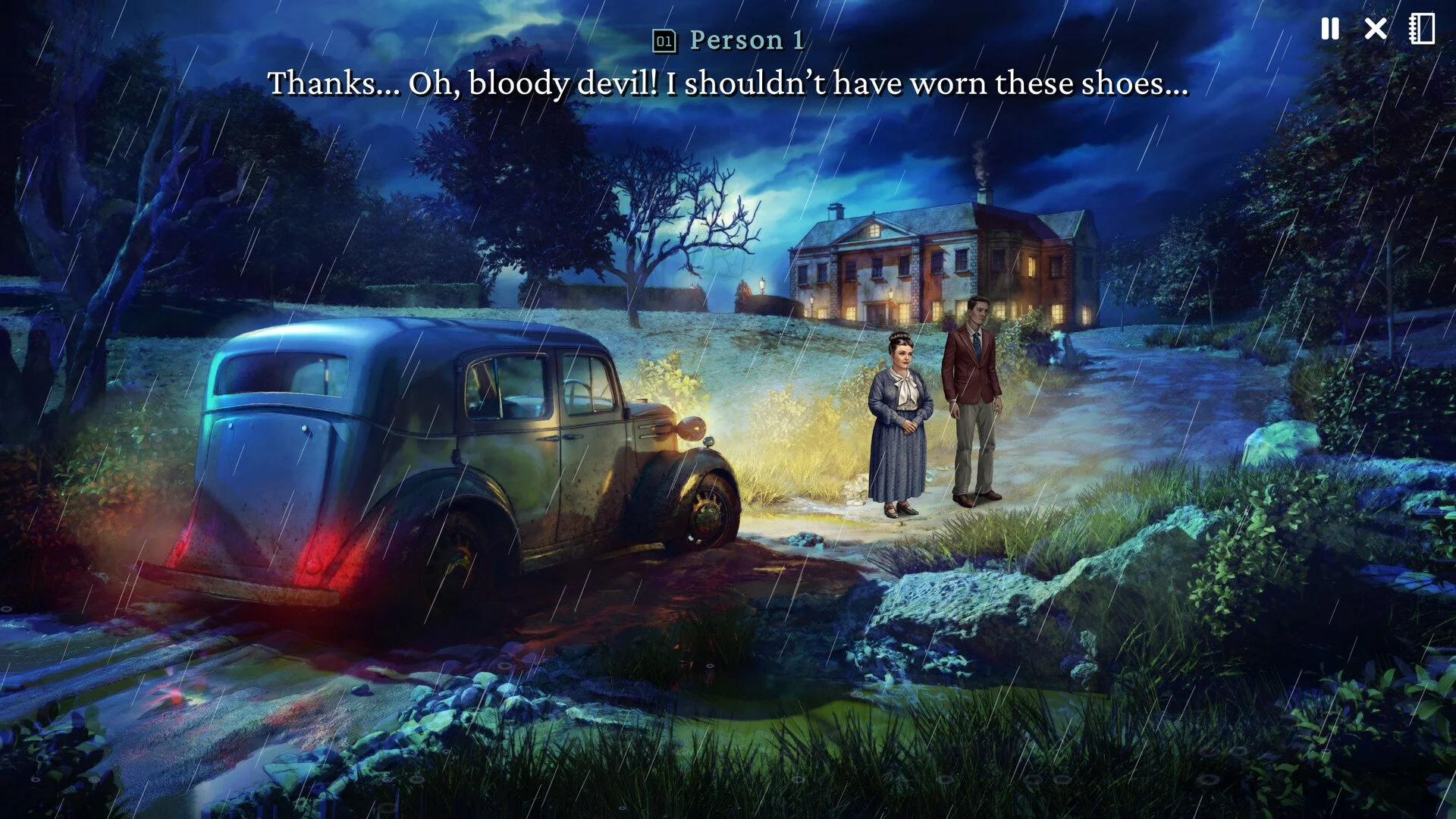
Image: Evil Trout Inc.
As keen as I might be on the gameplay, what The Incident at Galley House lived and died by was always going to be the quality of its voice acting: the game's art was in verifiably safe hands with Roottrees illustrator Henning Ludvigsen returning, the gameplay and writing were already proven with Type Help, but had Evil Trout missed the mark with the acting, the whole thing could've been compromised.
Thankfully the voice acting is, as much as anything else, a significant draw of the game. I'd say I can be quite picky when it comes to voice acting, there have been games in the past which were flat-out ruined for me by acting that I did not enjoy, even when most other players were seemingly unfazed by it. In a fully VA'd game like this, even when I think it's great, there's usually a character or two where I find the performance either lacking or grating in some way. Here in Galley House though, short of a line or two that no actor would be able to deliver without it sounding a bit campy, everything is executed superbly, including some quite intense dialogue at points.
That's probably in no small part due to having one of the industry's best casting directors attached to the project in Kirsty Gillmore, who was previously responsible for voice casting and direction on excellent indies like The Drifter, Loco Motive, Cassette Beasts and, albeit as part of a team, Baldur's Gate III. Clearly Evil Trout knew how important it was to get that final piece of the puzzle right, and they have absolutely done that.
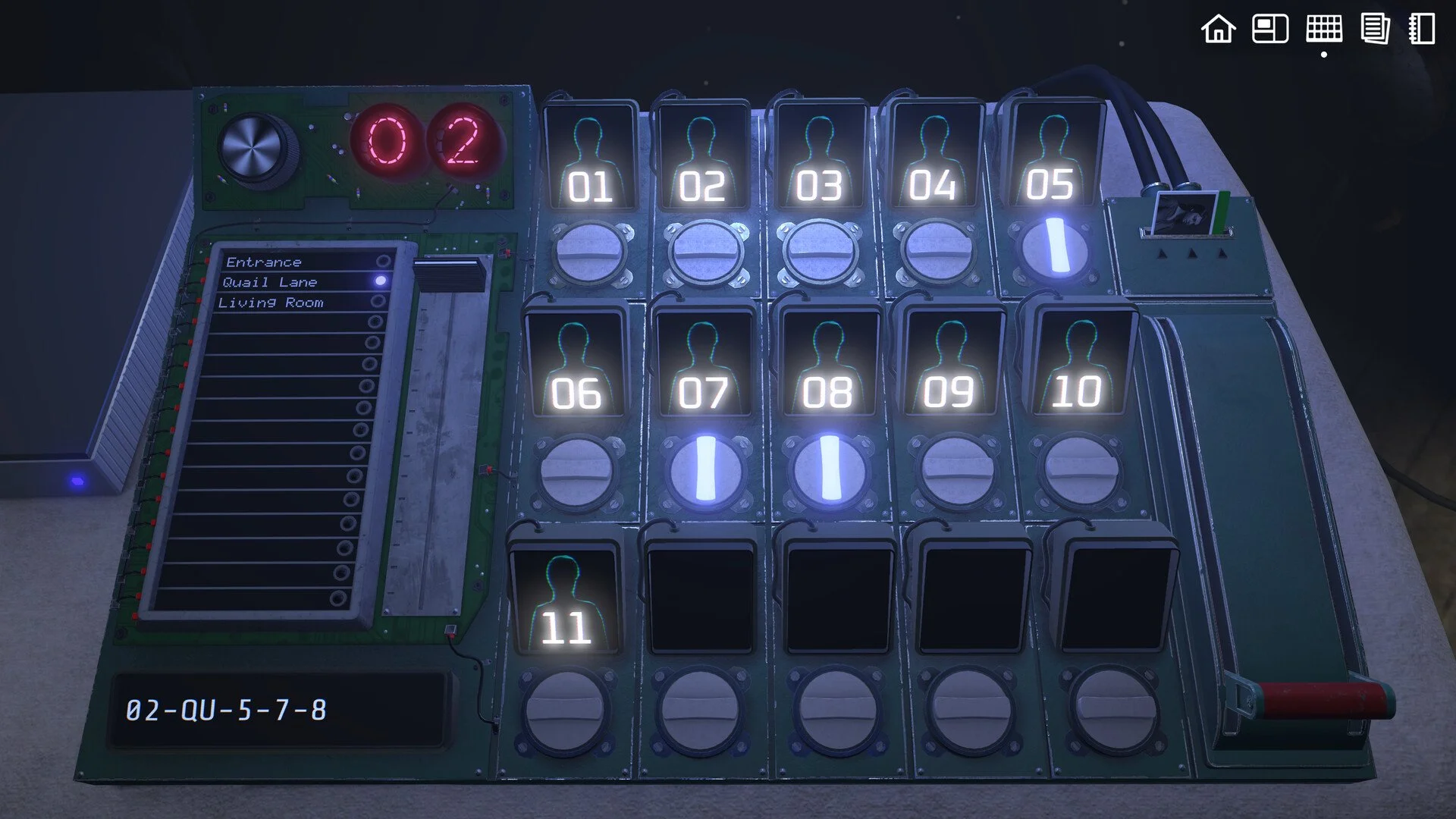
Image: Evil Trout Inc.
There is a 'but'. Well, sort of a 'but' – more of a warning – and it ties back to what I mentioned in the introduction of this video: that The Incident at Galley House is based on the text-based browser game Type Help, to enough of a degree that it describes itself as a remaster. I'd say that's maybe talking itself down a little bit, such is the extent of the overhaul, but there's no denying that the main story is, as far as I can tell, almost word-for-word unchanged from Type Help. Certainly the story's major (and minor) beats are consistent across the two games.
After publicly stating how I couldn't really get into Type Help I had my arm twisted into trying it one final time after receiving some advice (in a YouTube comment, no less) to play with a spreadsheet open in another window to help keep track of everything. It's worth mentioning here that The Incident at Galley House suffers from no such problems, providing players with ample ways to track their progress in-game without needing to mess around outside of it – I'd jot the odd thing down on a bit of paper because I do that for everything, but even that can be done in an in-game notebook, if you're so inclined.
For Type Help, I found that external spreadsheet to be necessary, but with its help the game finally clicked and I managed to play and enjoy it. That was a little over three months ago, and I have to admit that doing that has put something of a dampener on my Galley House experience. Not enough that it ruined it – incredibly far from it – but I found myself, on several occasions, wishing I'd just left Type Help well enough alone.
The story is good enough that even when you know exactly where everything is heading, having it presented in such a wonderful way means that if you liked Type Help you're still likely to enjoy Galley House: sort of in the same way that you might appreciate a screen adaptation of a book you really enjoyed. Still, if you haven't played Type Help I would strongly advise you to steer clear of it to get the most out of your time with The Incident at Galley House, which, with the utmost respect to the source material, is definitely a better way to experience the story.
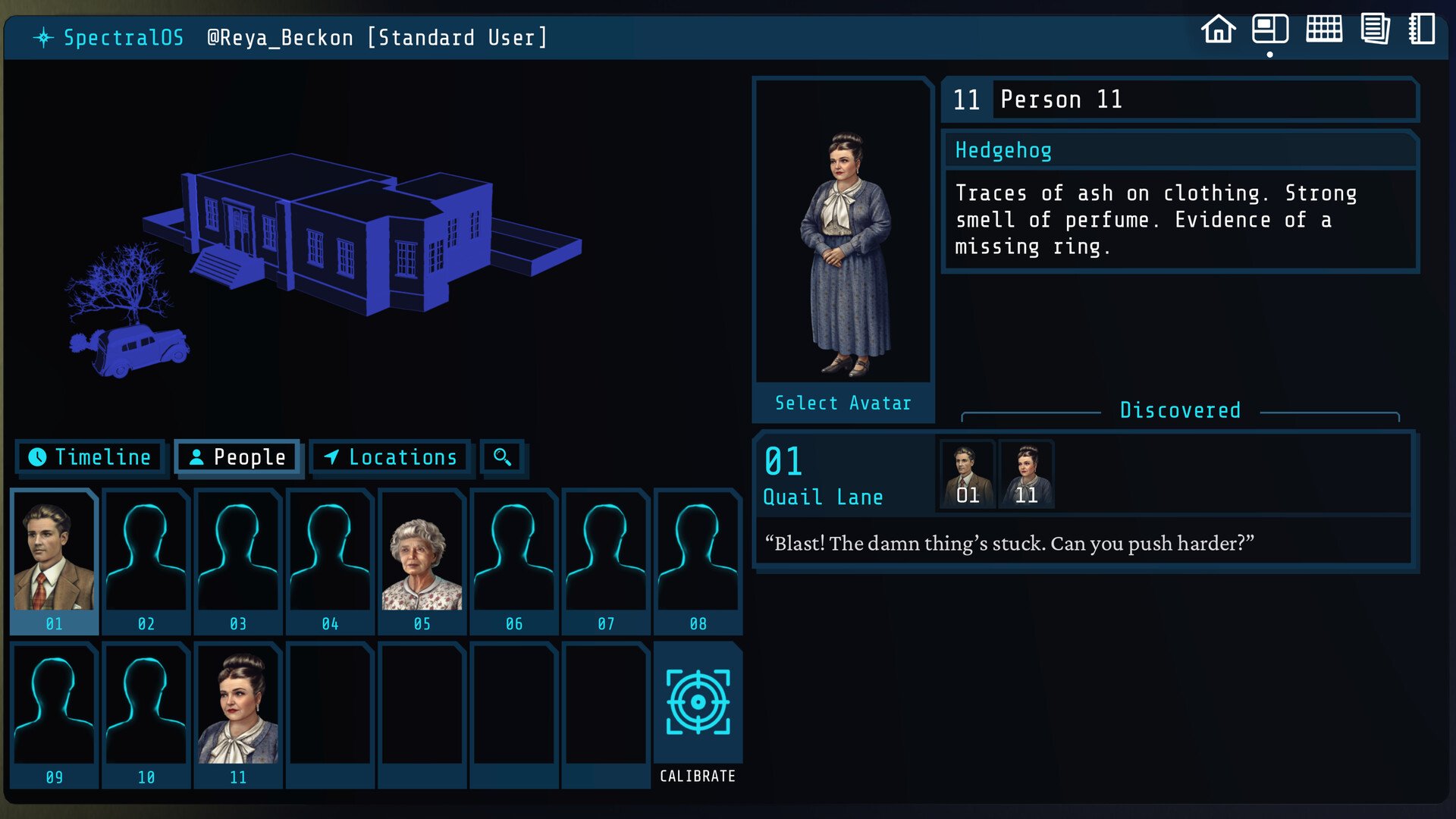
Image: Evil Trout Inc.
Outside of re-experiencing the story in a new way, there is something else included for players who've previously played Type Help. There are five bullet points on the Steam page, and right at the bottom of those is the understated: 'new content and puzzles to explore.' Given what Evil Trout did with Roottrees, effectively doubling the amount of game by adding a whole second mystery, I would've been surprised if this adaptation hadn't also come with something more than Type Help's original material. I'll tell you that the extent of that isn't as large as in Roottrees, but that's about as much as I'm willing to give away, other than to tell you that it starts wonderfully, and to say that it made me audibly exclaim: 'oh, that's clever,' about four or five times over the couple of hours it took to complete.
In short, Evil Trout have done it again with The Incident at Galley House, and are now two for two in terms of successful game adaptations. I look forward to seeing what they conjure up next, and whether that's a third remaster or something entirely new, I'm sure it will be another welcome addition to a small but impressive catalogue. The Incident at Galley House is awarded a 9/10 by IndieLoupe.com.
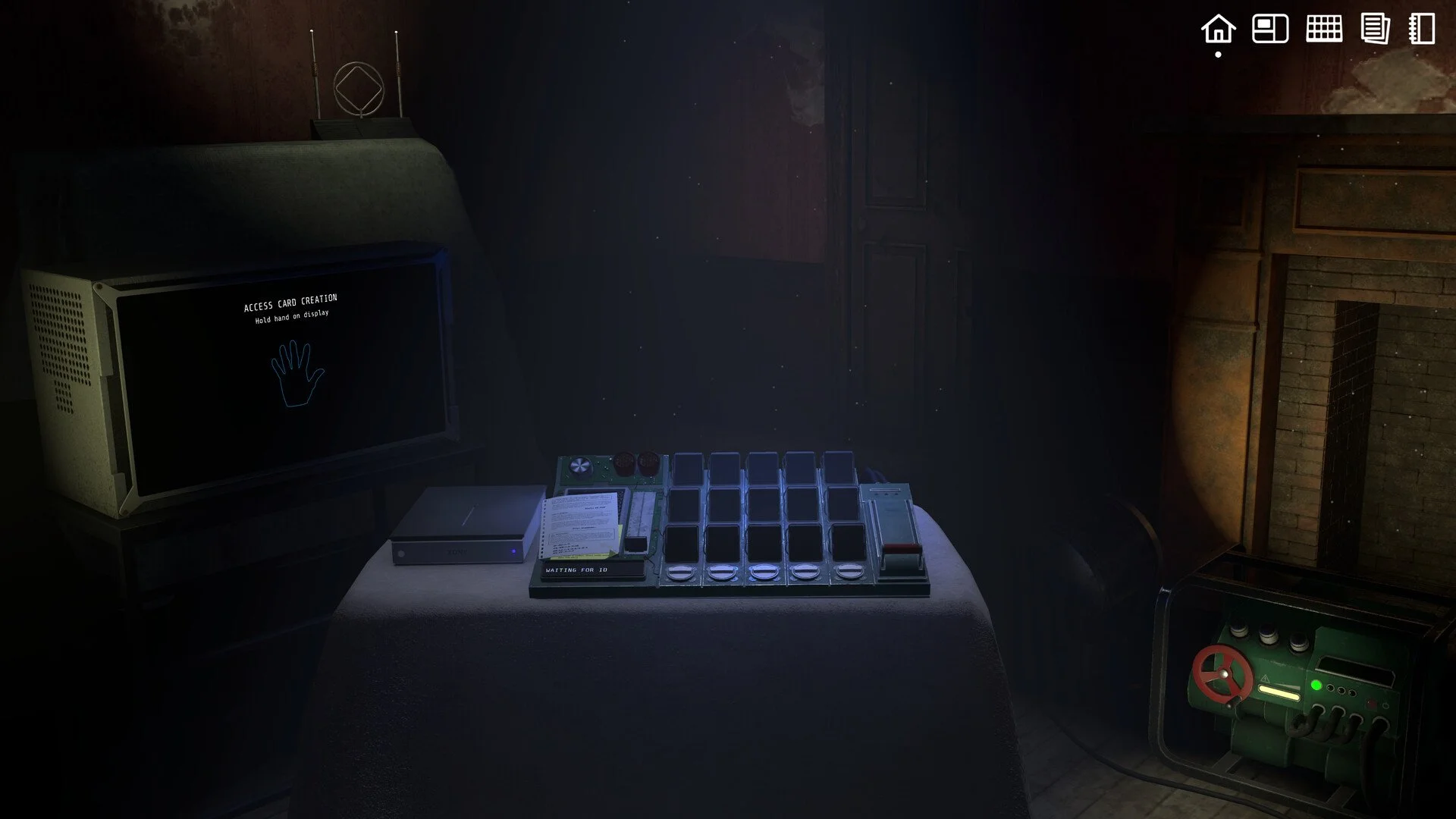
Image: Evil Trout Inc.
The reviewed product was provided on behalf of the developer.
