
Review: Roots Devour
Last time I played a card-based Lovecraftian video game – The Horror at Highrook – I went on record saying that I wasn’t really a fan of the whole occult-y, esoteric theme. Since then, perhaps in part because of that game, I’ve had a bit of a change of heart — I’m not saying I actively seek it out, but as long as it’s not too horror-oriented then I think there’s something there which does intrigue me. I’m still not going to go near anything like Still Wakes the Deep, but I could take part in a Call of Cthulhu scenario and enjoy it. That’s about where I am with the genre.
As such, when Roots Devour appeared on my Steam feed I was, as suggested, intrigued. It seemed like the right level of spooky: it didn’t look like the sort of thing where eldritch horrors were going to be jumping out at me and giving me nightmares, but there’s still something uneasy there. Looking into it a little more, I discovered that it’s turning the genre somewhat on its head: rather than fighting off an ancient God, or simply serving one, you are the ancient God. And look, I’m sure there’s some other games out there where that’s the case, but that’s a new idea to me. While I’m pretty happy with the hand I’ve been dealt, I certainly don’t need unlimited power but… it does sound like it could be kinda fun, doesn’t it?
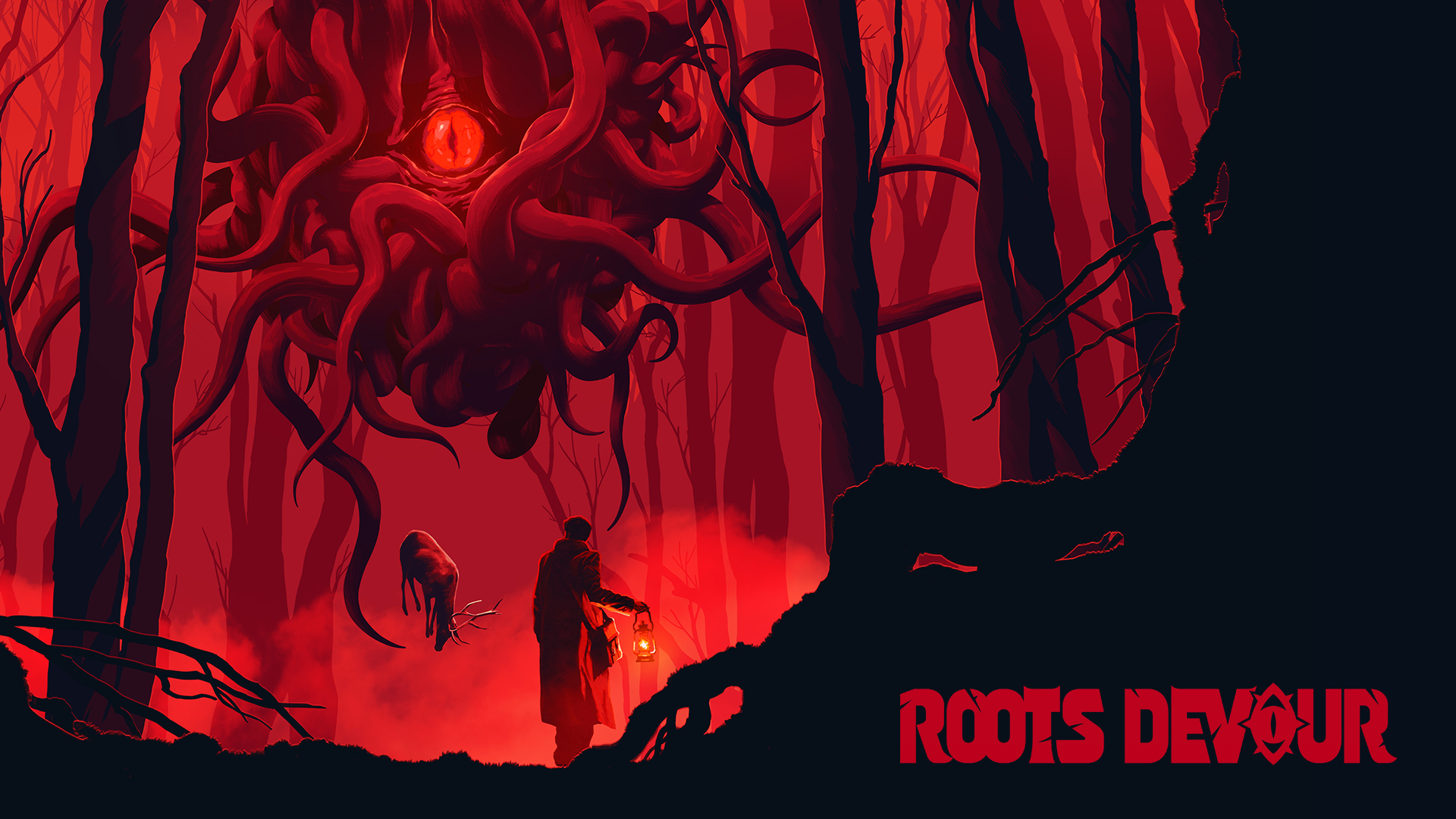
Image: Rewinding Games/GCORES PUBLISHING
-
Developer: Rewinding Games
Publisher: GCORES PUBLISHING
Release: 28 January 2026
Retail Price (Steam): 14,79€/$14.99/£12.99
So, unlimited power. Well… not to begin with. You start Roots Devour as a bundle of roots hidden deep within the forest. These roots are, to put it lightly, irregular. They don’t thirst for water, but for blood. So you’ll stretch yourself out, grab a rat or two, and begin consuming. Gory as it sounds, appearance-wise it’s pretty tame: perhaps if you’ve got a better imagination than me then picturing what the game is representing through its cards and squelchy sound effects is more easy and more off-putting, but, as indicated, I’m a bit of wimp and I think the strongest reaction it got from me was “ew that’s gross.” That’s not a criticism, by the way – and we’ll get onto those – but a little disclaimer for scaredy-cats like me to let them know that this one’s relatively safe for you to play.
The name of the game is catching creatures and stealing their sanguine secretions. The blood you collect becomes your main resource: every time you stretch out a new root, it costs some blood to do so. Effectively, you want to spread out as wide as possible without running out of blood. There’s also a secondary resource: water, which you start each level with a small amount of. When something is just out of reach of your typical bloody roots, you can spend some water to reach that bit further and grab ahold of it. Unlike blood, there’s no reliable way to get more, and running out of it often how your runs will end.
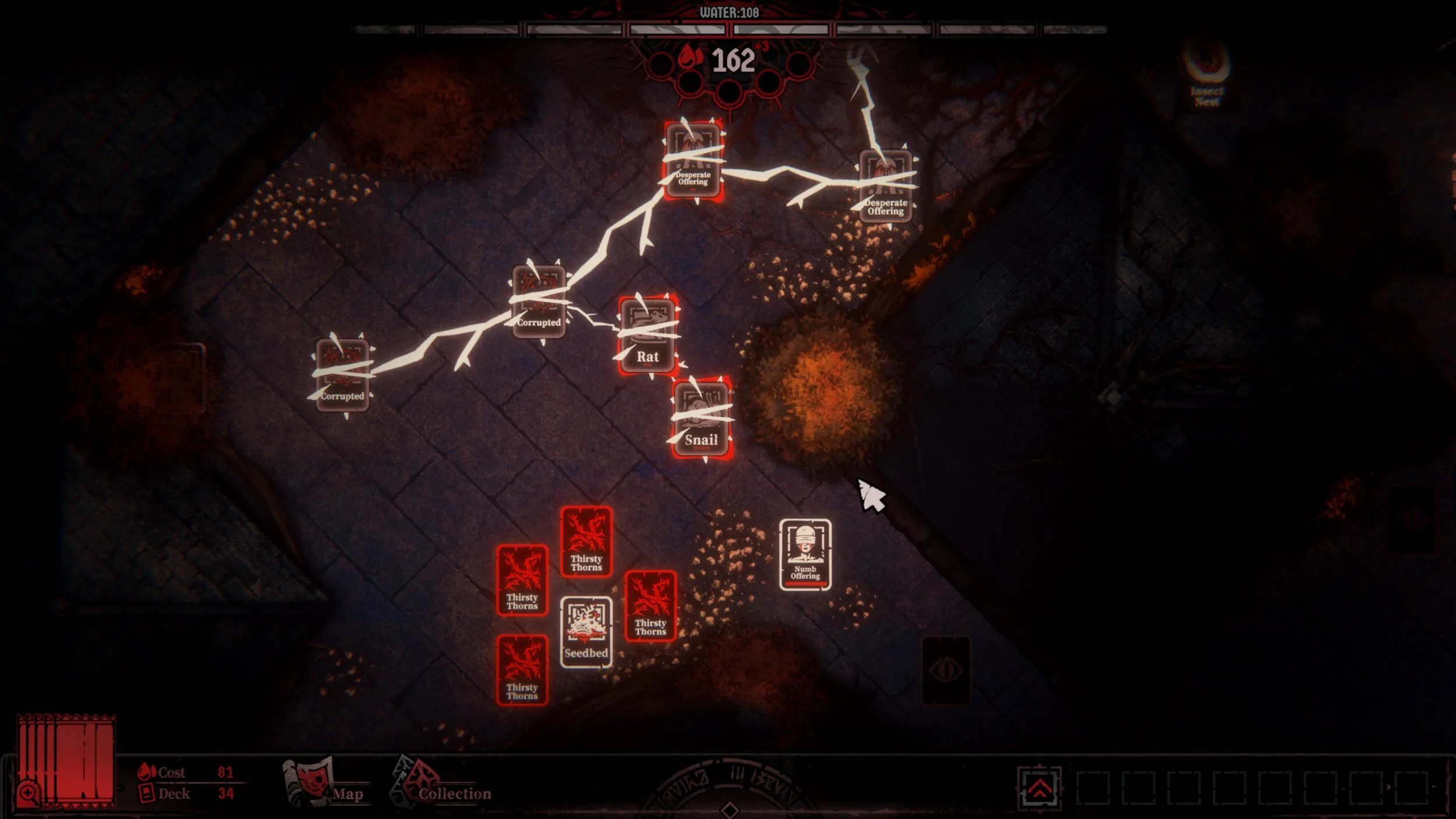
Image: Rewinding Games/GCORES PUBLISHING
I think here it’s worth mentioning what this game isn’t. I just used the term ‘run’, and a quick look at the Steam screenshots might start giving you that dreaded ‘here we go, it’s another roguelike’ feeling. And, yeah, there’s a whiff of that, but this game is a lot more story-oriented than its appearances had me believe. Everything has been hand-placed, there’s no procedural generation – other than slight changes because of the story, the locations remain consistent every time you visit them. If you don’t finish a level and have to leave because you run out of water or blood, you return to a place called ‘The Altar’ where you can buy some upgrades with the blood you earned, before jumping back into the main part of the game. As long as you’ve done a reasonable job, you’ll likely have discovered a checkpoint that acts as a different entrance to the level, so it’s usually not a case of restarting completely, but there might well be a little bit of retracing your steps required.
That’s all fine, and I enjoy the core mechanic, but there are some significant problems which begin to arise – and a huge amount of that comes from the fact that there is no option to save mid-run, which I find unforgivable in this instance.
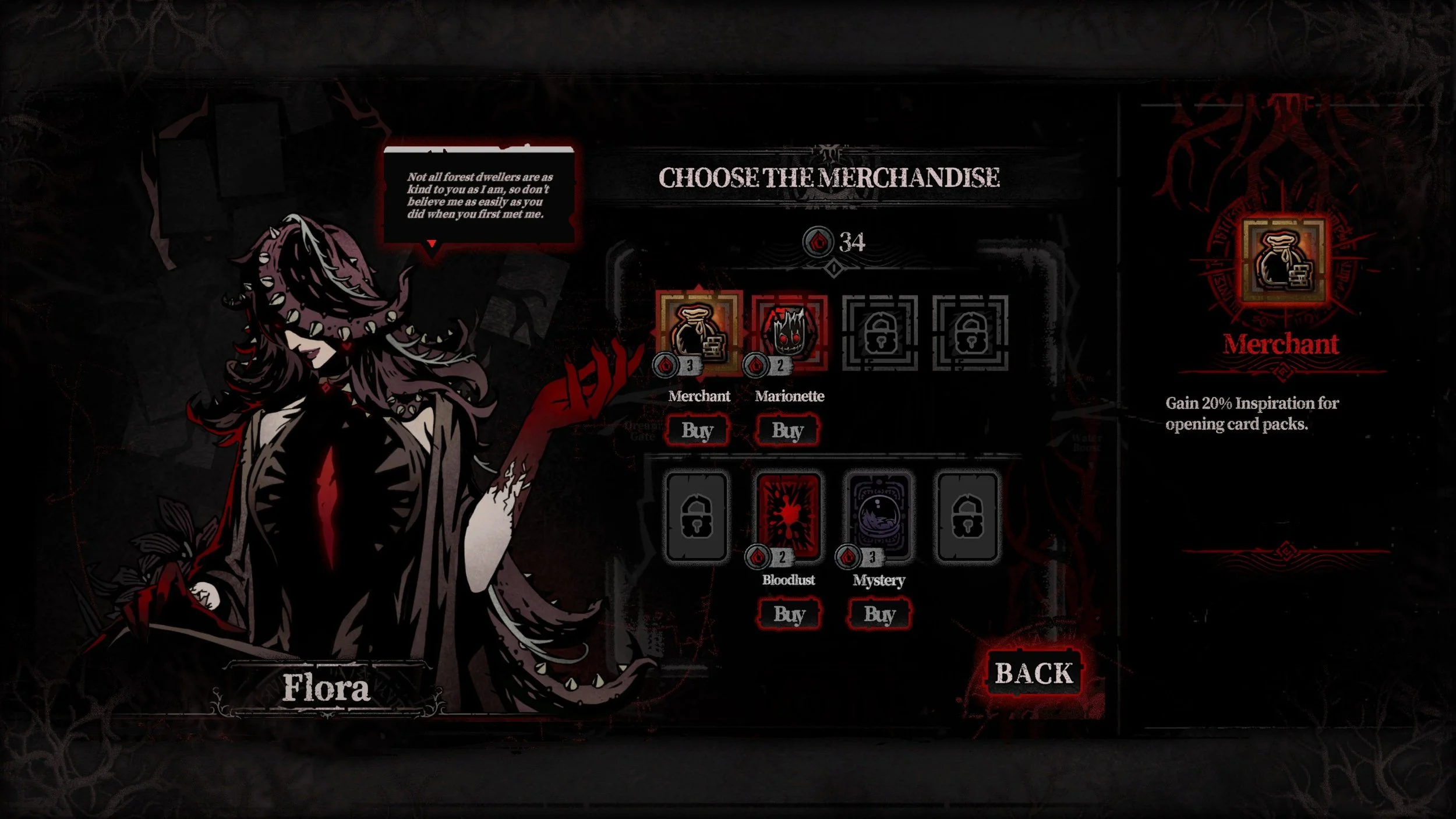
Image: Rewinding Games/GCORES PUBLISHING
Let me explain: if these were runs that took 20 or 30 minutes then it wouldn't be a problem – not ideal, but I understand that save systems can be a bit of a pain to implement, and you could argue that it’s not worth it in that situation. But it's so far from that I can’t comprehend not having one. I’m talking sessions that can last upwards of three to four hours. You’re disincentivised from stopping in several ways, primarily because you’ll have to re-run bits of story and parts of the locations, but also because you can, with some difficulty, build up an engine in a level, giving you an abundance of resources. Leaving and coming back means starting again with something relatively meagre, and no assurances that you’ll be able to replicate that – or the knowledge that, to do so, you’ll need to spend half an hour retracing your steps to get back to that point. As an example of the longevity of the sessions, I finished the second of the four locations in one sitting, and I suspect I could’ve done the same for the final one had I not already been playing for hours, to the point that I just needed to stop.
That presented another big problem with the game. Not only did I have to give up the progress I’d made in the level, but instead of clicking the confusingly-named ‘Return’ button I clicked the ‘Main Menu’ button – my fault, I acknowledge – it does say that unsaved progress won’t be saved, but that meant what I earned during that hours-long run didn’t get recorded. Had I clicked that ‘Return’ button, I would’ve got the same ‘Are you sure to quit?’ [sic] message, but instead it would’ve ended the run and given me those resources. Confusingly (and luckily) the unlocked checkpoints from that run did get saved and so I used those next time to complete the game – had that progress been completely wiped out then Roots Devour would’ve sat unfinished.

Image: Rewinding Games/GCORES PUBLISHING
So, I had to work a little harder than I would’ve liked for that ending, but what did it give me?
As mentioned in a recent video essay on AI in Games narrative is probably what I look for most in a game, so when I said ‘this game is a lot more story-oriented than its appearances had me believe,’ you’d perhaps think that makes it more ‘my sort of thing’ than it would otherwise be. You would be… mistaken.
The story is fine. It’s localised well, for the most part, and there is a decent overarching idea, but it’s full of repetitive, unskippable scenes which eventually became, for me, a chore. I don’t like spoiling plot, but there are only so many times you can watch as two little card-represented people have a conversation, fully with the knowledge that one of them is secretly harbouring a root monster who will, invariably, attack the other just as soon as that dialogue is over. I won’t deign to get into any plot holes, but it does end up as a story that you’re trying to skip through to get back to the actual enjoyable part of the game.
And that’s a shame, because it is fun – when the game allows you to do it, and when you don’t feel like you’re being held prisoner to the idea of losing all your progress if you stop playing. If you were actually able to leave it and come back as you pleased, and if you could skip over non-critical cutscenes, I think the user experience would’ve been massively improved. It would still be somewhat rough around the edges, with a handful of poor translations and occasional instances of Chinese characters slipping through betraying a lack of polish, but things that are relatively forgivable, and nothing that hugely impacts the game.
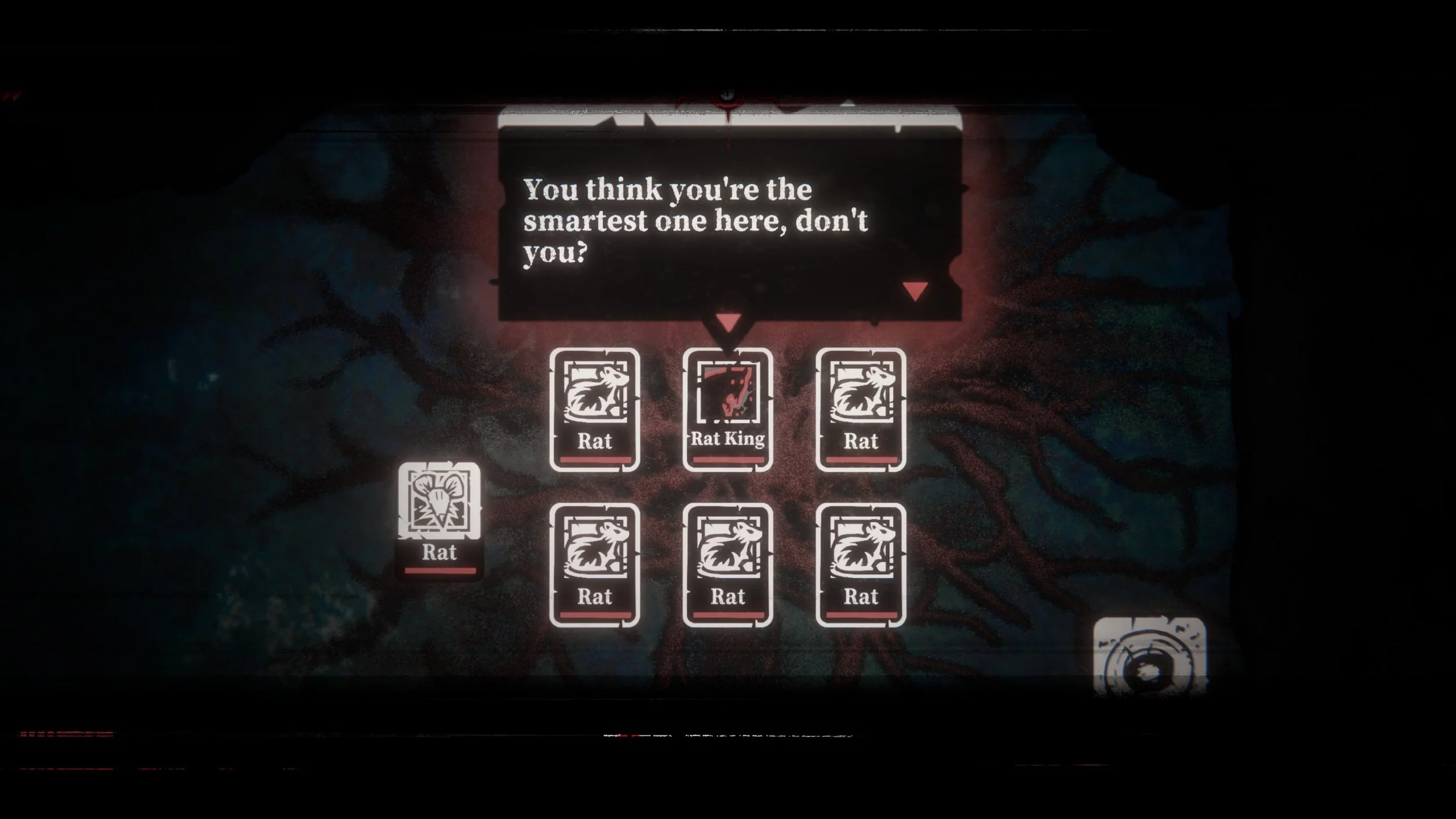
Image: Rewinding Games/GCORES PUBLISHING
If you really like the core mechanic – which I do want to reiterate, is enjoyable – can accept the way the narrative is delivered, and are okay with sessions that you might not be able to leave for several hours then maybe this one is for you. I do think there's promise there, but as it stands it's difficult to recommend – and that’s almost solely on the back of that lack of a save feature.
Maybe that gets implemented in future – if you’re reading this a while after it’s gone out I’d recommend seeing if that ever occurred, even though it should’ve really been there from release. I’ll put a little note below if I catch wind of it happening. For now though, Roots Devour is a frustratingly flawed game, albeit one with the potential to be significantly improved upon with some changes. It is awarded a 6.5/10 by IndieLoupe.com.
The reviewed product was provided by the publisher.
