
It is September 1959 and a man walks into the police station in Cedarvale, Buckinghamshire. He is greeted by the on-duty constable who recognises him as their newly-appointed coroner and asks him to fill out a short form ahead of starting in the position. No sooner has the man signed his name – Coroner Edgar Whitmore – than his first case arrives: a brutal car crash that has left one person dead and another critically injured. In Death at Fleming Manor, players assume the role of the coroner and investigate this case, and eleven others, determining the cause of any deaths at each new location. Along the way they'll uncover a wider conspiracy, where new cases are caused by the fallout of earlier ones, and seemingly unrelated scenes begin to link together in unexpected ways.
-
Developer: SUPERTHUMb
Publisher: SUPERTHUMb
Release: 3 November 2026
Retail Price (Steam): 17,99€/$17.99/£14.99
You investigate those cases through gameplay which, on the surface, feels most similar to the Golden Idol series: investigating a set of tableaus (and documents you find within those tableaus) and clicking on any relevant words or items to add them to a word bank. You'll then use those words to complete your own paperwork: typically starting by figuring out the identities of everyone present, and working your way towards issuing death certificates for the less fortunate of those people.
Those death certificates aren't neat little gap fills where you just need to add the character's first and last names to complete them: these are almost certainly the most in-depth documents I've encountered in a game like this. Yes, you'll need their name, but you'll also need to provide the time and date of their death, their age, the exact location of their death, the manner of their death (accident, homicide, etc.), the specific cause of their death, using medical terminology… and that's just the first page. Some of them run for six pages, which, okay, are admittedly less in-depth than that cover sheet but should still give you an idea of the amount of information you need to process at some of these scenes.
On top of all that, your role as a coroner is sometimes stretched beyond what you might consider your typical remit – the job description says you should be writing those death certificates, sure, but there are few times where you'll not even have a body to speak of. On these occasions, you might instead be asked to determine who the specific beneficiaries of a will are, or put some medicine bottles back in their rightful places after a first aid kit has been clumsily dropped. While these less fatal puzzles make up a relatively small part of the game, they do break proceedings up nicely, such that you're not always having to deal with some horrendous crime scene.

Image: SUPERTHUMb
There is something that I find interesting about Fleming Manor, which is that, to me, it feels so much more sombre than other titles in the genre, even those where equally horrific things are happening. I spoke in my most recent review for Legion Was Here about how a lot of these games – particularly the ones chock-full of murder and nefarious deeds – have a fantastical element to them, such as Legion's face-swapping ability, the compass in Return of the Obra Dinn, or the golden idol in the aforementioned Golden Idol games.
Instead of that, Death at Fleming Manor attempts to go in the complete opposite direction: being steeped entirely in realism. I mentioned earlier that you have to provide a specific cause of death for every certificate you submit, to the extent that you'll need to leaf through a medical manual to find, for example, the correct terminology for the precise type of asphyxiation that's happened, determining the difference between various types of suffocation, strangulation, and so on.
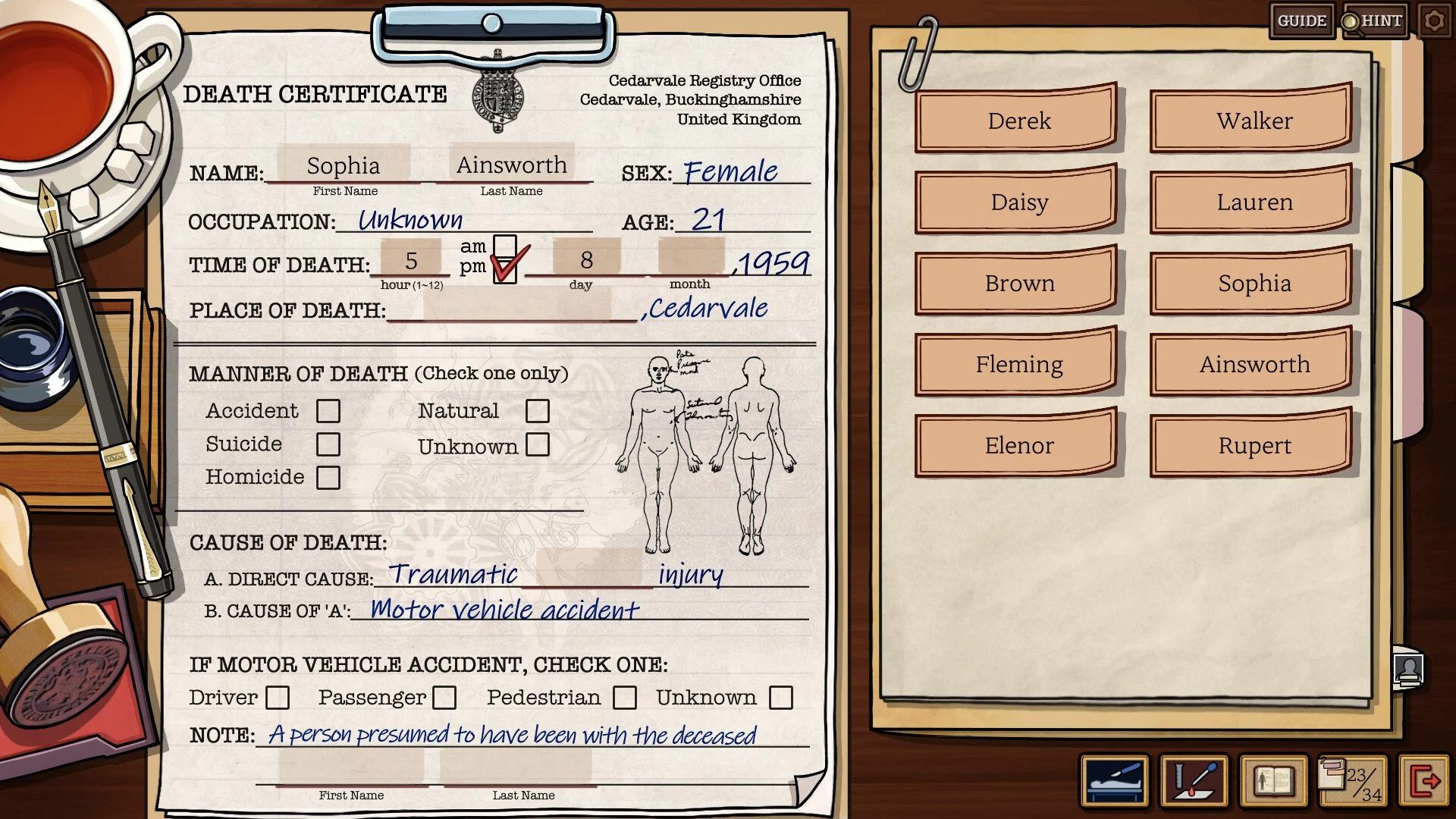
Image: SUPERTHUMb
As far as I can tell it's all incredibly well-researched and accurate: I'm not much of an anatomy expert but it's certainly convincing enough for a layman, and a cursory glance at the credits will show more people credited under the 'Forensic & Medical Consultation' section than any other. Whether it's perfect or not is somewhat secondary to the fact: unless you're an actual pathologist or have some very specific interests, it will certainly give the illusion of realism, which adds to that morbid atmosphere.
I'm not sure if it's the same for everyone, but when I think of The Case of the Golden Idol the scene that first comes to mind involves someone being immolated, but there's a level of humour there. The surreal graphics certainly play a part in that, but someone being burned alive 'because magic artifact' hits less hard than someone being burned alive because they were on a WW2 battlefield and they used their body to shield the rest of their unit. Everything having to to live quite so relentlessly in the real world means all the game's monsters feel like things which you could one day encounter.
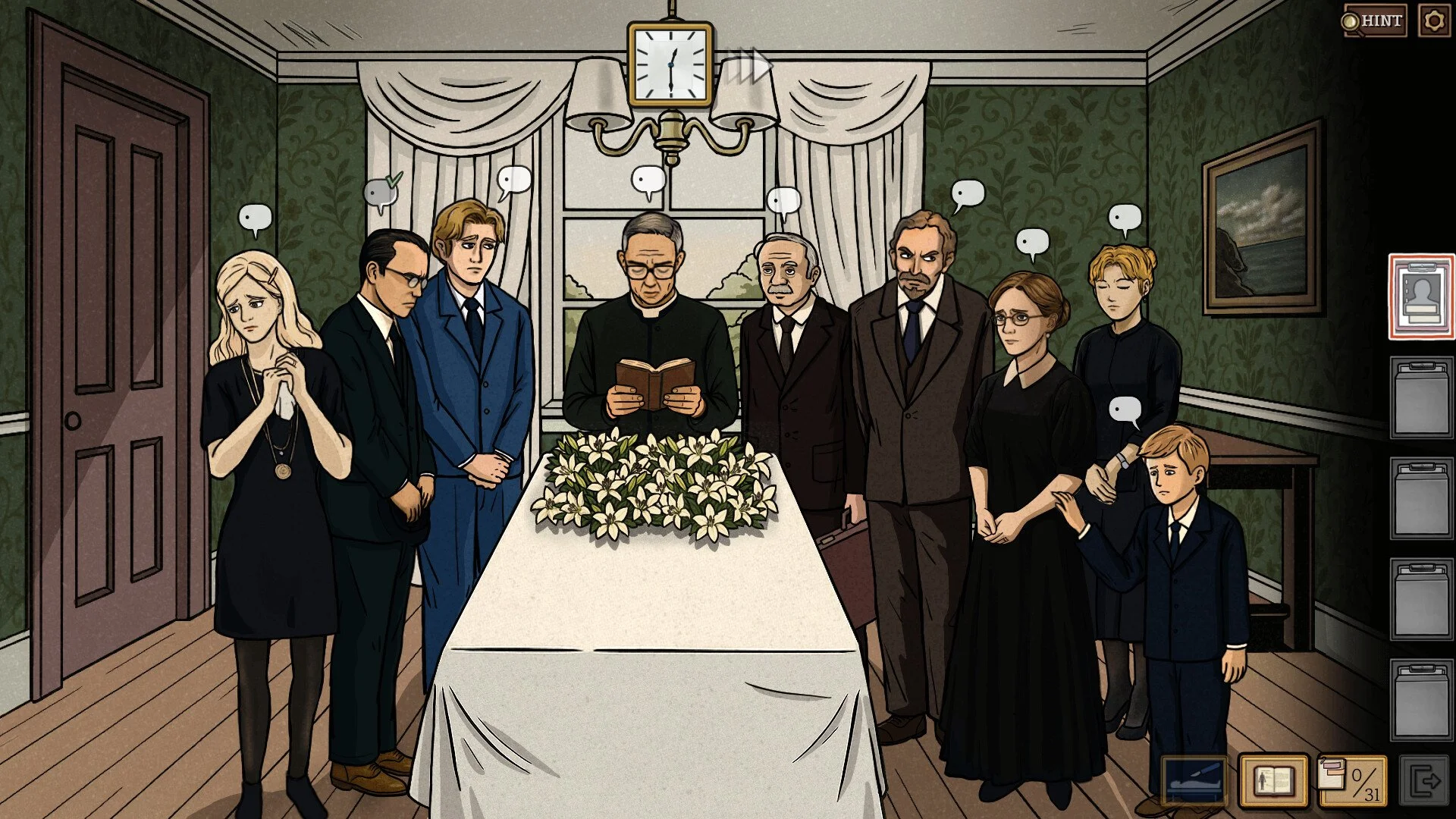
Image: SUPERTHUMb
There is one area which compromises the realism that the game otherwise works so hard to establish, and that is the writing – specifically the prose and the way things are phrased, as opposed to the overarching plot and the game's world building. You do have to cut SUPERTHUMb some slack, they're a South Korean studio and they've had to localise a large script into English, but a lot of the dialogue is a little more mechanical or clunky than you would hope.
Importantly, that's never in a way which makes the game's clues or puzzles unclear – if anything, you could accuse it of the opposite, where unnatural phrasing draws attention to aspects which you might otherwise overlook — where something is very clearly expository. While it's far more important that the puzzles remained legible (and that is the case, the quality of those aren't diminished at all) it does ultimately detract from the story's final payoff when everything sounds just that little bit… off. There are a few plot lines that lean into the absurd, and I think those in particular would've landed better had they been framed within language that was more believable.
Obviously it's easier said than done, but I think – while keeping the plot entirely unchanged – the English version would've benefitted significantly from a final edit to iron out those issues: to make the writing more natural and, while at it, more authentic to England in the 1950's (no removing things from your 'pants' here, thank-you-very-much). To reiterate, it absolutely doesn't damage the quality of the puzzles or of the gameplay, but if the story and immersion are very important to you, then you might find that an otherwise enticing mystery falls slightly flat.
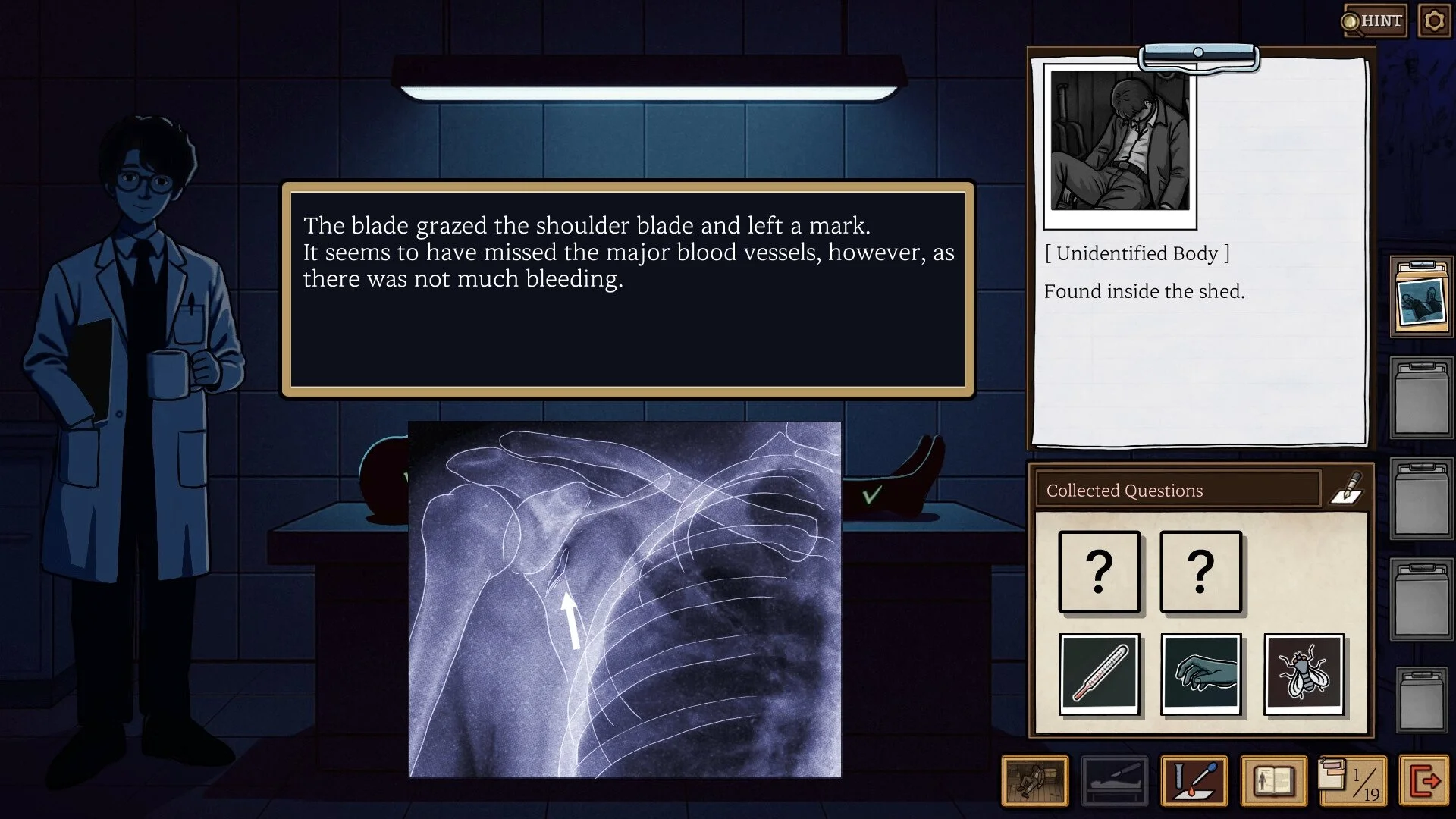
Image: SUPERTHUMb
To return once more to The Case of the Golden Idol, it's a game which has had its core mechanic borrowed by quite a few games now, and, for me, most of them fall pretty wide of the mark – they are a far cry from that golden (idol) standard. Death at Fleming Manor does enough differently that I'm less keen on the direct comparison to begin with, but, if we're calling it a 'Golden Idol-like' then it's easily my favourite since the original games. With improved writing it could've been up there with the very best in the genre, but I'd still heavily recommend it to anyone who's a fan of Golden Idol, Roottrees, et al.
Death at Fleming Manor is awarded an 8/10 by IndieLoupe.com.
The reviewed product was provided on behalf of the developer.
