
Review: Hermit and Pig
Hermit and Pig is the debut title from two-man studio Heavy Lunch, and features a pair of what I don’t think it’s unfair to describe as unlikely protagonists. Video games are – certainly more than any other medium, in my opinion – quite good at getting their audience to just go along with unusual protagonists, but I still have to admit my initial reaction to these two was a sort of: ‘wait, really?’ as opposed to any level of excitement at the prospect of putting myself into the main character’s presumably pretty nasty shoes.
Still, there was something endearing about him, which I couldn’t quite place. Maybe initially it was just his cute best friend, but after a little while with this hermit, he’s arguably become one of my favourite characters from any release over the last year or two.
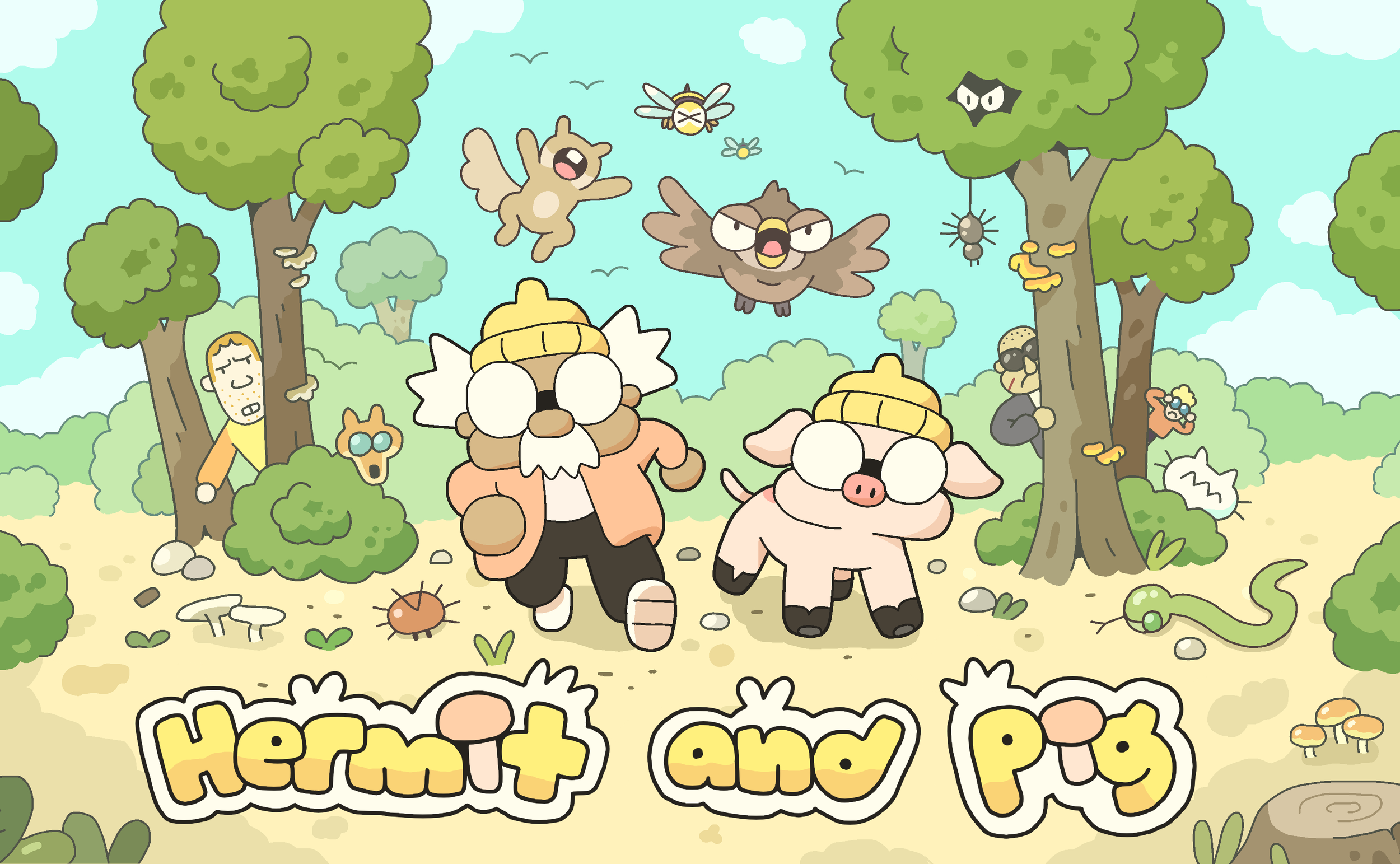
Image: Heavy Lunch
-
Developer: Heavy Lunch
Publisher: Heavy Lunch
Release: 5 February 2026
Retail Price (Steam): 14,79€/$14.99/£12.99
In Hermit and Pig you play as the eponymous ‘Hermit’ – that’s as much of a name as you really need, as you, by definition, don’t really interact with anyone else. The exception to that being (the also eponymously-named) ‘Pig’: your trusty truffle-sniffing sidekick. Of course, that means your day-to-day conversations are pretty one-sided, oinks notwithstanding.
I don’t think it’s much of a spoiler to say that Hermit is quickly thrown out of his very small comfort zone: being reluctantly forced into an awful lot of interactions over the course of one incredibly busy day. Not all of those are friendly, but whether he’s brawling or attempting to have a chat, it’s all pretty stressful for our elderly protagonist – if anything, he seems slightly more comfortable getting into a scrap than a conversation. When it comes to fighting, it’s fists (or cane, or slingshot) up, off we go, but if there’s someone nearby who might want to talk to Hermit, the beads of sweat start flying off him.
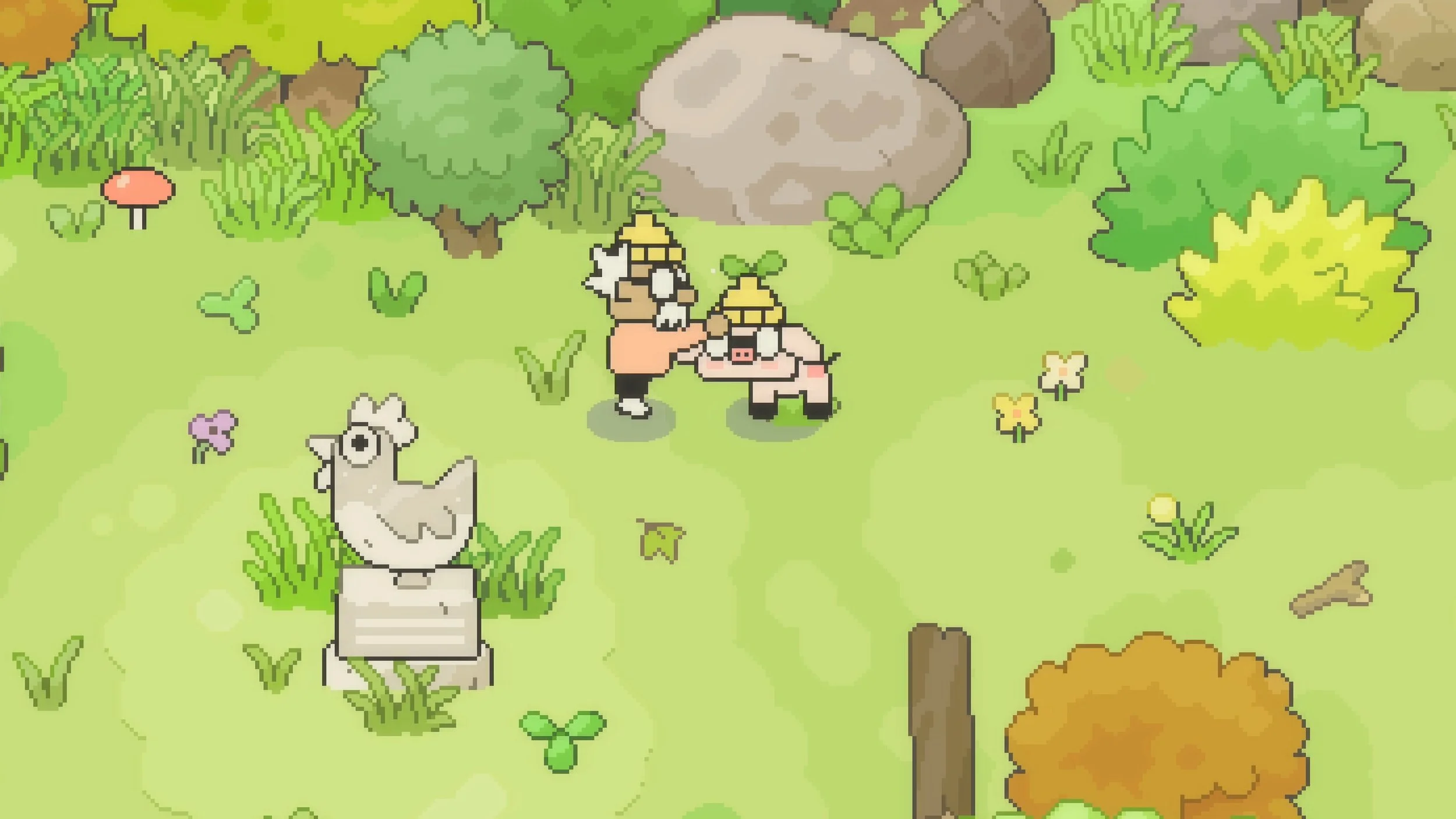
Image: Heavy Lunch
You probably know how a turn-based RPG works, so I won’t bog you down with too many details, but there are a couple of peculiarities here when it comes to the combat. Firstly, Hermit’s six attacks are performed by inputting a three-key combo of up, down, left and right buttons (which are mapped to WASD on keyboards). I really like the configuration of those, as there’s typically a physical association you can make – to kick it’s a sweep of the three bottom buttons from left-to-right (A-S-D), to stomp it’s an up followed by two downs, as if you’re raising Hermit’s foot and crashing it back down, to punch you pull back with a couple of lefts and swing forward with a right (A-A-D) — that sort of thing. I think you can feel a little overwhelmed by that at first – there’s six moves to learn and initially you might not really make those associations, particularly on account of the second part of combat that I want to draw attention to: that turns are timed.
There’s a timer that is constantly ticking down in the top-right corner: if you don’t get your actions in then that’s your turn wasted. Perhaps a little cruelly, that keeps going even when you’re looking in the manual to try and initially learn those attacks, so in that rush it’s easy to miss that there is a little more sense to those combos than you might first realise.
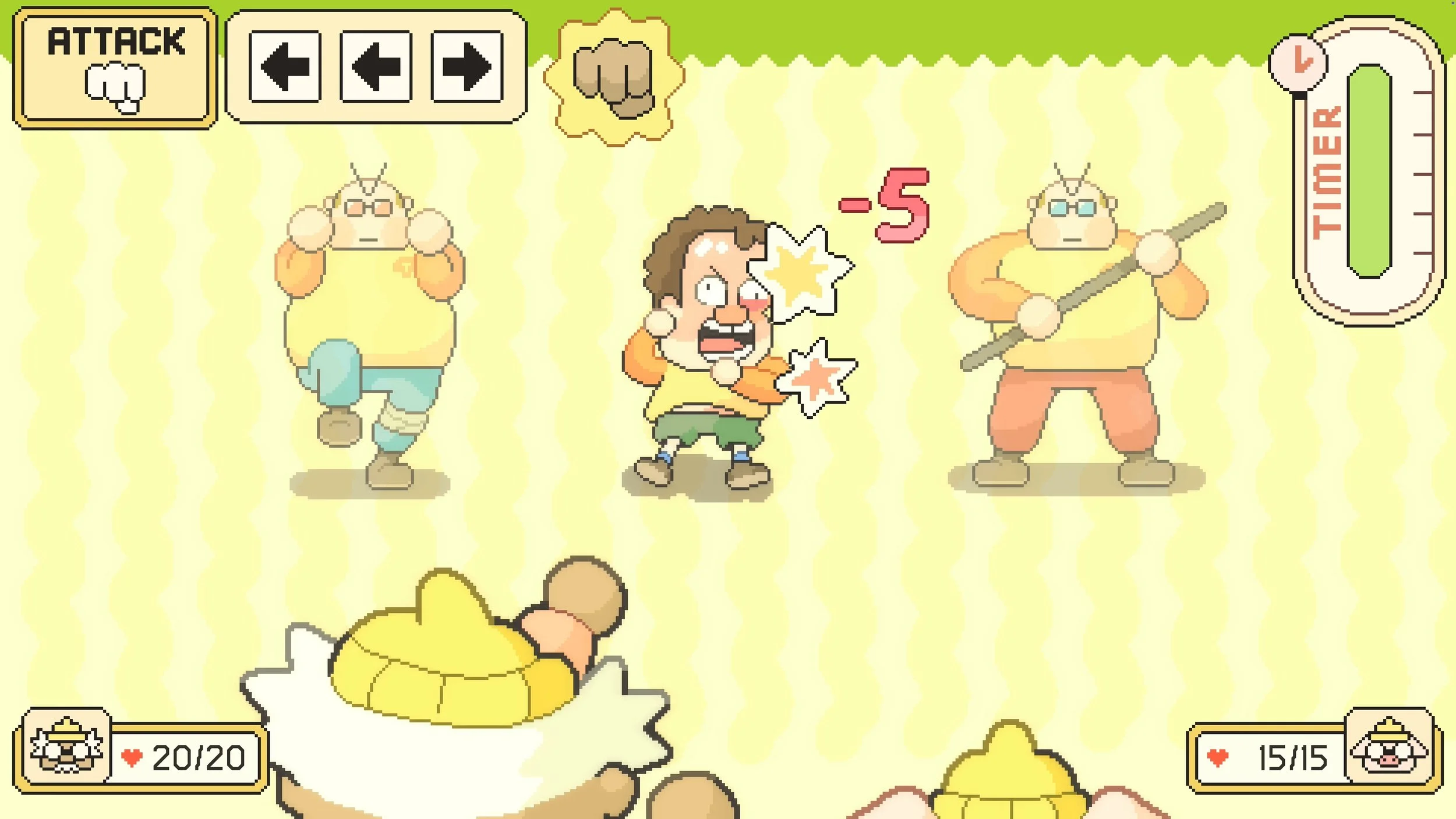
Image: Heavy Lunch
At least, that’s the way the game works as presented in the tutorial, and I have to admit I was a little overwhelmed by all of that. Sometimes I go into a game wanting a challenge, but it felt slightly at odds with the experience I was expecting from Hermit and PIg. For me, I was hoping for something that I could unwind with, not necessarily something where I needed to remember a bunch of combo-moves and input them within a relatively brief time limit.
Luckily for me, then, Heavy Lunch have created a game that is incredibly accommodating for its players, with ample options that allow them to change up the rules of combat and play on their own terms. Don’t want to have a turn timer? You can turn it off. Don’t want to input those codes? You can give yourself a drop-down for your attacks instead. Hell, if you really want, you can have Hermit automatically choose the best attack available. Want the timer to pause while in menus? There’s an option for that, too. On top of all that there’s also difficulty options available, and, while it’s probably pretty clear that I didn’t try this, there's certainly a combination of options there that I think could make this game very challenging indeed.
I think I was playing on what could be fairly described as ‘easy mode’ – a sort of 2 out of 5 in terms of available difficulty settings, but I arguably should have given the default options a bit more of an attempt; I turned off both combo-inputs and turn timers as soon as the opportunity was presented to me, and never really looked back — but there were some fights, particularly in the mid-game, which I suspect I’d have enjoyed more with one or both of those options still in-play. I felt those combats dragged on just a little bit too much, and I don’t know whether that would’ve been the case with some added challenge – even if those fights would’ve ended up taking longer, I’d have been juggling more things, rather than just going through the motions of grinding down my enemies’ health.
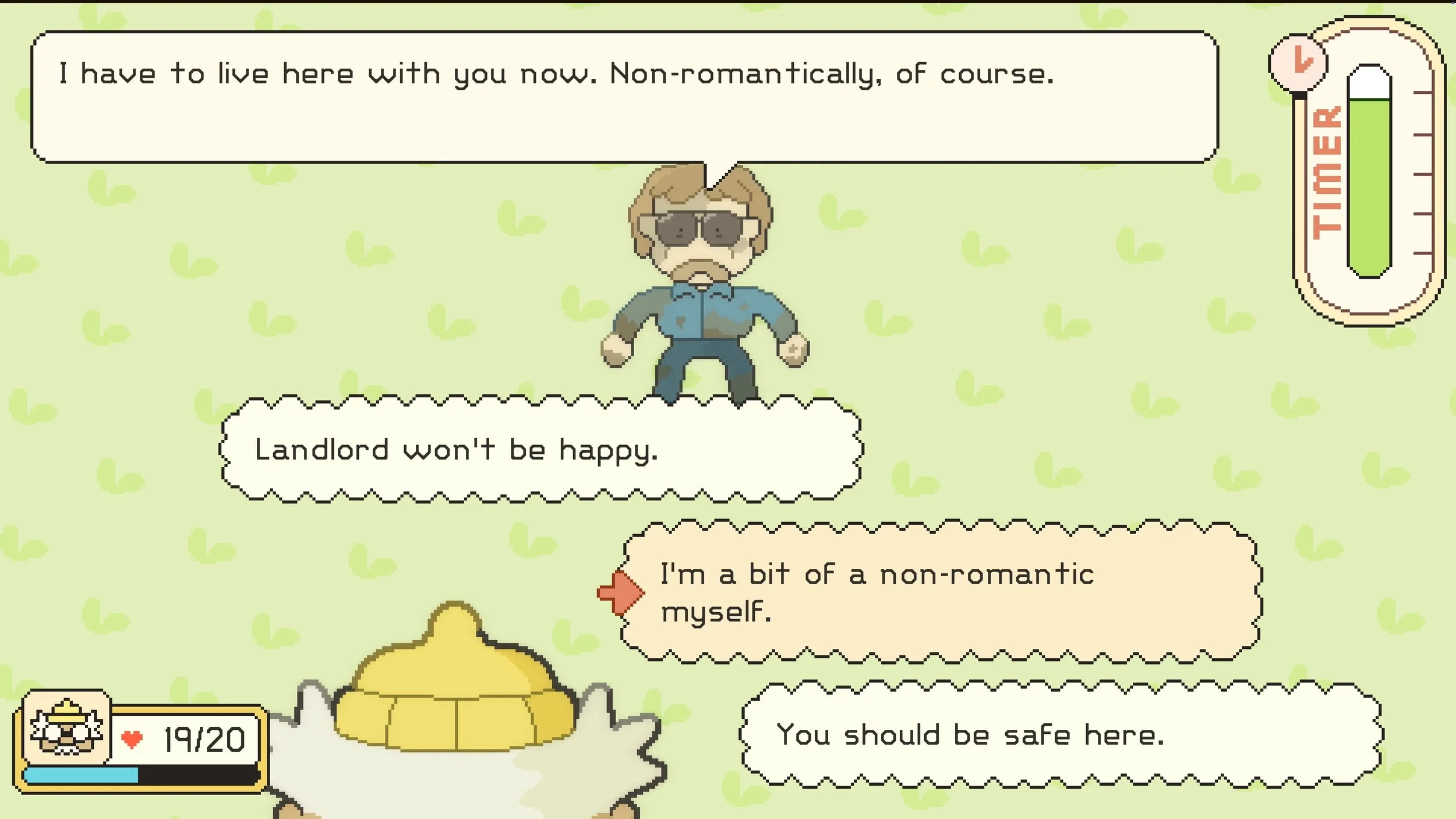
Image: Heavy Lunch
Outside of the combats, you’ve also got the conversations, which are presented in a similar cut-away style. Each time Hermit needs to speak, you’ve got three options to pick from, many of which betray his status as a bumbling, socially-awkward introvert who’s trying his best to avoid stumbling over his words or blurting out the first thought that comes to his mind. Name a more relatable video game character, I’ll wait. If he says something inappropriate, his conversation partner will cringe and he’ll take a single point of damage. Gameplay purists might not appreciate this, but I couldn’t help but often pick those options knowing full well that, mechanically, it wasn’t doing anything other than ticking my hit points down. I was honestly thrilled when I found a trinket – this game’s equipable items that give you small boosts – which gave me bonus XP for making people cringe, as I’d been happily doing that anyway up until that point.
That brings me onto the humour in Hermit and Pig: I think it’s fair to say that comedy is probably the most subjective area of writing, but for me this is the funniest game I’ve played in a long time. Perhaps that’s because I can, a little too readily, relate to the Hermit and his struggles with regular human conversation — and if I know my audience, perhaps you would be able to, too. While I don’t want to talk up a game by talking down others, I often struggle with games that are trying what feels like too hard to be funny; nothing ruins a game faster for me than frequent jokes that don’t land. Thankfully that’s not the case here, and while the humour was definitely a big factor in why I enjoyed Hermit and Pig so much, it’s only one part of the charm that this game exudes.
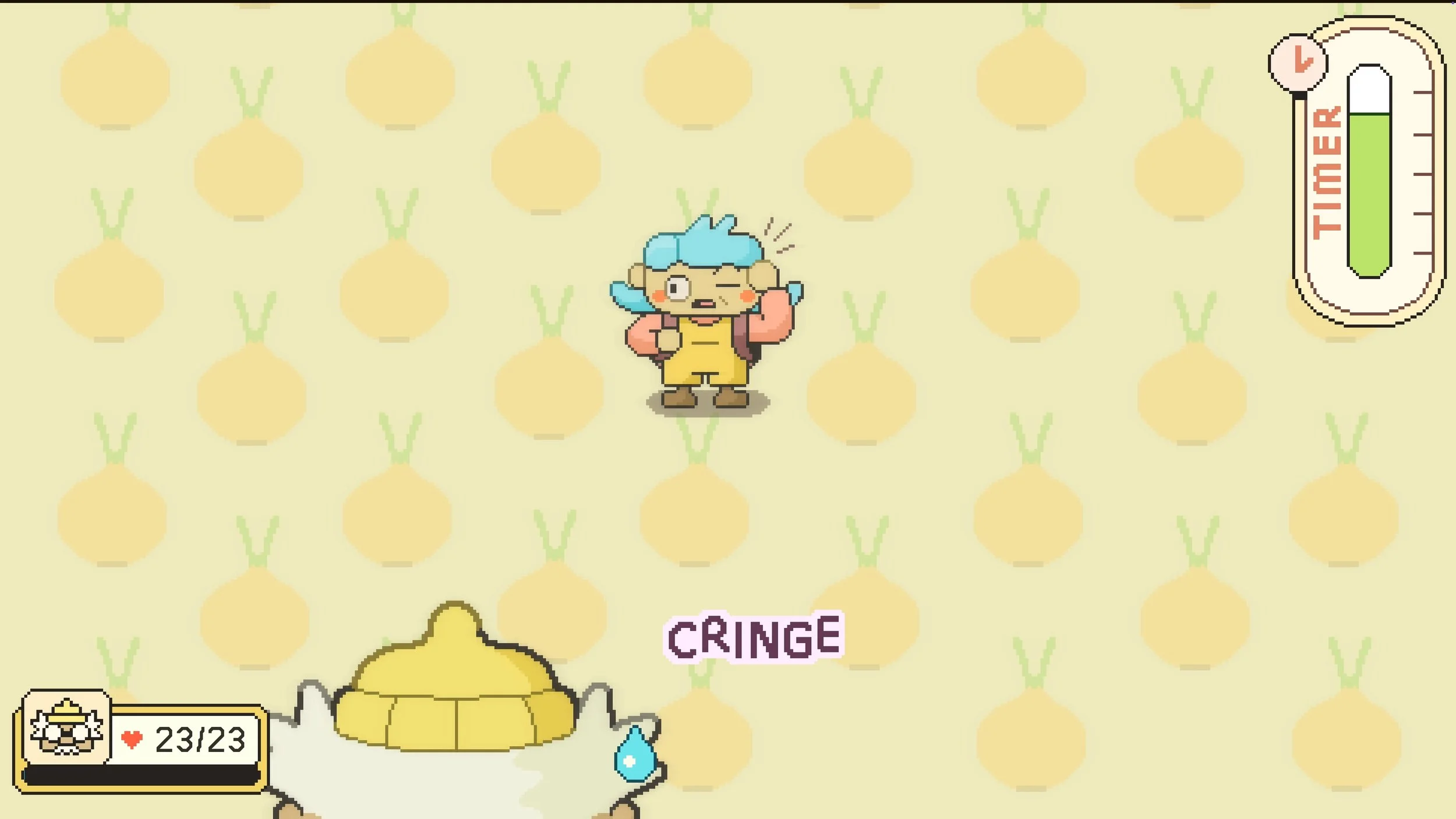
Image: Heavy Lunch
I’ll give you another, roundabout, example of that. I made a throwaway gag in last week's review of Space Warlord Baby Trading Simulator, which meant that, for the video version, I wanted some random footage, from any game at all, of a sea cucumber. That joke wasn't quite as infantile as you might think. Either way, I half-checked if there were any in Subnautica and when I couldn't find one there I pretty much gave up: I mean, if there wasn't one there, where would there be one?
Cut to the day after I'd sent that review to the presses, and lo-and-behold what villain should this peculiar hermit I'm playing as be confronted with, other than what appeared to be a sea cucumber. I mean, full disclosure, I later learnt that it’s actually supposed to be a leech, but Hermit and Pig is so delightfully off-the-wall that it seemed perfectly reasonable to me that there would be a sea cucumber there. There’s an unbridled creativity here that you don’t often see: I don't imagine there were many conversations between the game’s two-man development team where one of them would say ‘nope that’s too mad, we’re not putting it in’.
That isn’t to say it’s nonsensical, and despite the game’s unlikely and unassuming heroes, there are a couple of overarching messages in Hermit and Pig that feel meaningful and elevate the game beyond what would otherwise be a fun little RPG that you’d enjoy, but more-or-less forget a few days after finishing. Could those messages be more subtle? Probably, but neither Hermit nor Pig really do subtle.

Image: Heavy Lunch, IndieLoupe.com - not a sea cucumber
I’ll leave it to you to discover exactly what those messages are – just knowing that he’s a Hermit can probably help guide you towards at least one of them, and I’m not including “DON’T FORAGE UNLESS YOU KNOW WHAT YOU’RE DOING,” even if that’s arguably the most important take away.
Don’t… don’t do that. But know that there is a lot of heart here.
I had a fantastic time with Hermit and Pig – I’m probably getting a little ahead of myself, and usually I’m an advocate for developers trying something new each time they release a game rather than relying on sequels, but I’d love nothing more than another game, or two, or twenty about this unconventional duo. Either way, I’m excited to see what Heavy Lunch do next, after a very strong debut. Hermit and Pig is awarded an 8/10 by IndieLoupe.com
The reviewed product was provided by the developer.
