
Review: The Berlin Apartment
We’re closing out our reviews for 2025 with a game I’d been looking forward to since I first saw it towards the start of the year: because I mean, look at it. The Berlin Apartment is one of a couple of games recently released by German developers Blue Backpack, along with metroidvania Constance – another game worth checking out if you’re a fan of that genre, because, apparently, there are a lot of you out there. Long-term readers however might’ve noticed that for me, it’s not the sort of thing I usually go in for – there’s a gaping Silksong-shaped hole in our indie game coverage – with something like The Berlin Apartment being a lot more in my lane.
I actually played it a little while ago now, but between other projects (like compiling the good old Indie Games of the Year list) it’s taken some time to get around to, which, in a way, I think helps with a game like this – because, to its credit, the stories that it presented me with have stuck with me for the last couple of weeks, between rolling credits and finally putting words to the page.
So, what are those stories, and more to the point: what is The Berlin Apartment?
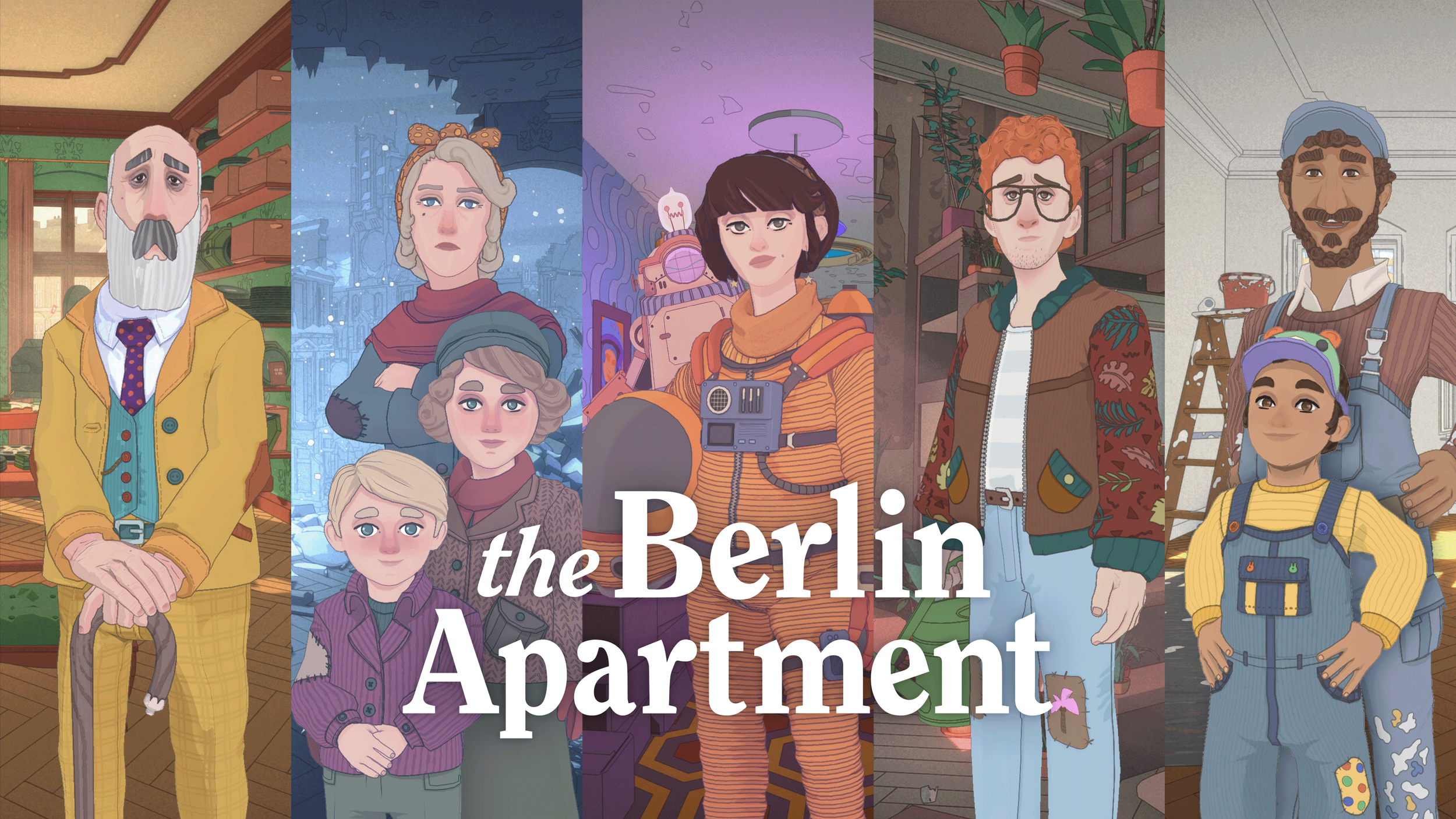
Image: Blue Backpack
-
Developer: Blue Backpack
Publisher: ByteRockers’ Games
Release: 17 November 2025
Retail Price (Steam): 24,50€/$24.99/£20.99
In The Berlin Apartment – at least at the very start – you play as Dilara, a young girl joining her father Malik, who is a handyman tasked with refurbishing an old apartment in, surprisingly enough, Berlin. The year is 2020 and, with all the schools shut for some reason I’ve tried my best to forget, there’s nowhere else for Dilara to go. Still, she can be of some use to her old man while he renovates this run-down apartment; nothing too arduous, obviously, but fetching screwdrivers and tearing wallpaper down is definitely within her means. And it’s here that Dilara will make her first discovery: an old letter hidden behind the wallpaper, left by a previous resident.
This is where the stories get framed a little strangely – Malik seems to be inventing them to entertain Dilara, which does undermine the journey you’re about to undertake through 87 years of history. You go into the experiences questioning if they’re things that actually happened, or whether it’s just a dad doing his best to keep a bored child from causing too much trouble in his workplace. It is relatively easily forgotten, and I chose to pretend that they were true, but, regardless, it felt like an odd narrative choice.
Those four stories – from 1933 to 1989 – are pretty disparate: there’s the thinnest of threads that carries through between two of them, but otherwise they’re almost entirely self-contained. A cursory glance at some other reviews from both critics and Steam users reveals that there isn’t a huge consensus on the best of these chapters, which speaks to how varied they are and how each has their own merits.
So, given that these stories are effectively what this game is about – outside of looking beautiful – and, as mentioned, they’re more-or-less standalone experiences, we’re going to do something a bit different and have a little look at each of them, in the order I encountered them – some micro-reviews of each, if you will. Starting with…
1989: Growing Wings
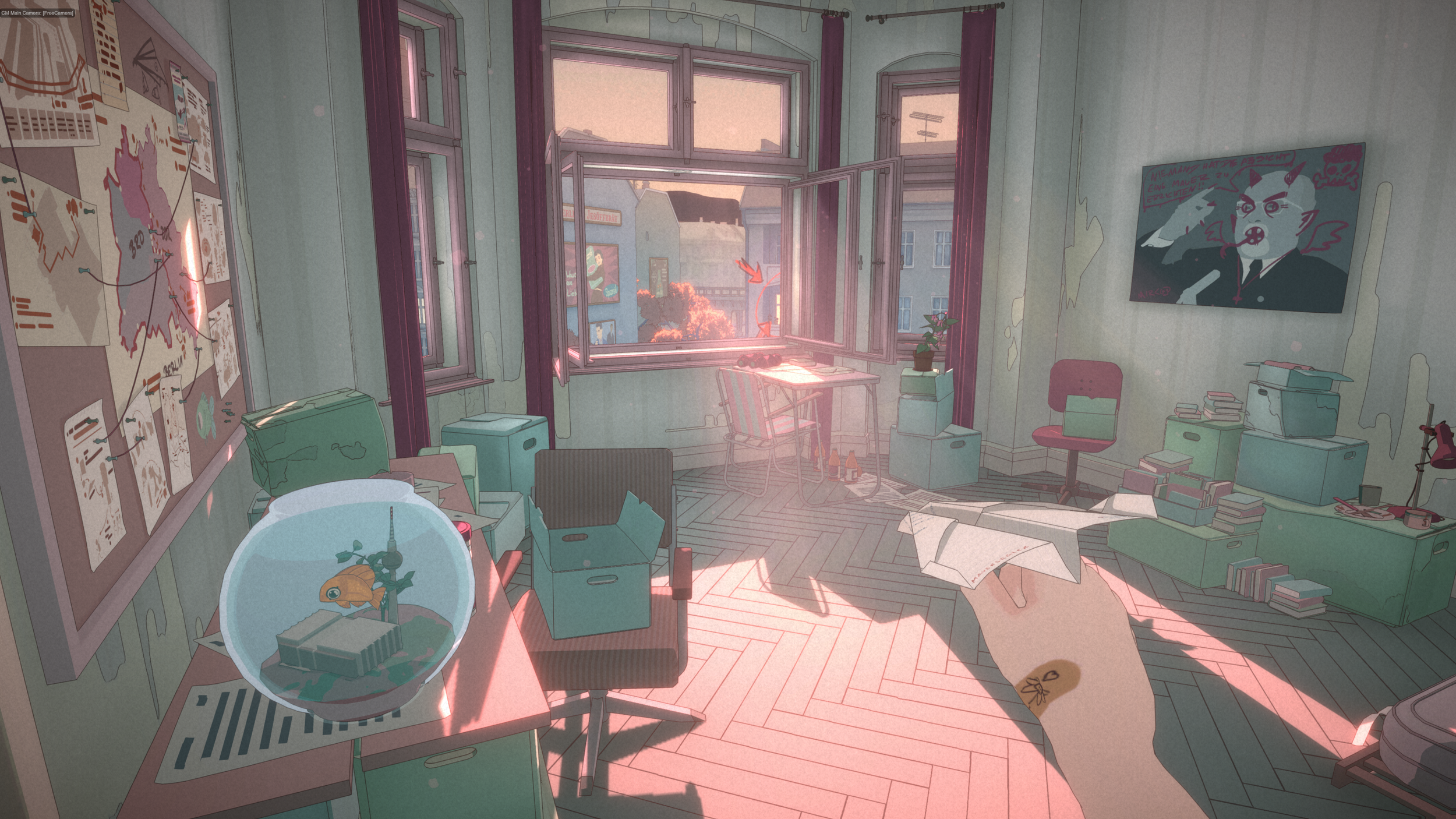
Image: Blue Backpack
If we’re not counting the game’s opening, the first story players will encounter is the most recent of the four – 1989. It’s still a 31-year flashback from Malik and Dilara’s 2020 setting, and a relatively gentle introduction to the apartment, which does a good job of establishing the setting without having too heavy a premise. Here, you’re playing as Kolja, a botanist whose day is interrupted when a paper airplane from the West comes flying through his window. It’s, intentionally, a little bit farcical in places – you’ll need to suspend your disbelief surrounding the whole “paper planes being thrown incredibly accurately over the Berlin Wall” situation – and the rest of the chapter is sort of in-line with that in terms of silliness.
While I have no qualms about voice actor Tomas Spencer’s performance, I did find the very English accent a little out-of-place in this one – though that does give me the opportunity to point out that the game can also be played with German voices and English subtitles, if players prefer. I’d personally lean towards recommending having the audio in whichever language you’re most comfortable with, as when I experimented with playing it a second time in German, I found myself occasionally missing subtitles while interacting with other things on-screen, even if I slightly preferred them in a few instances.
1933: The Suitcase
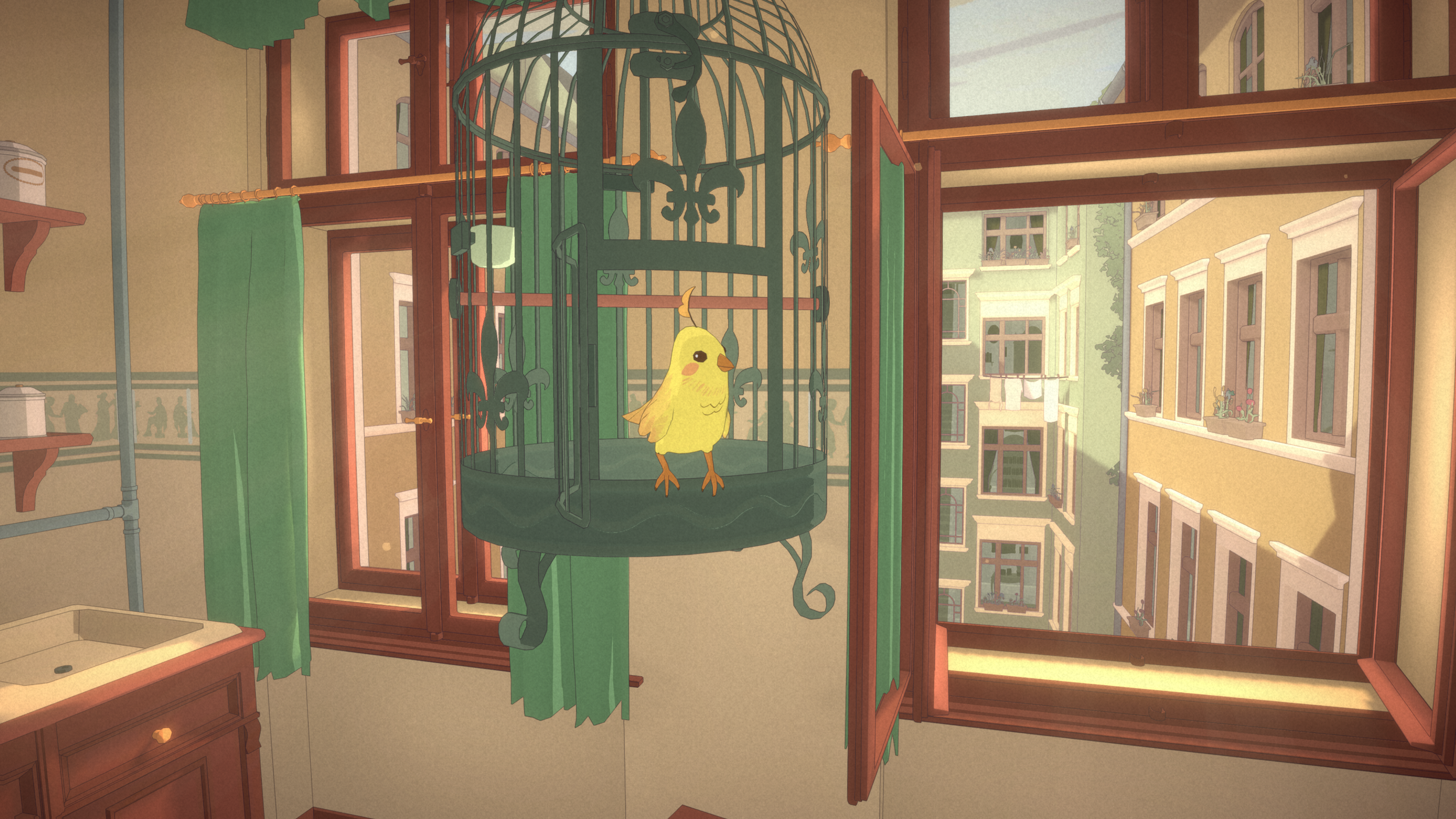
Image: Blue Backpack
In my playthrough, the second story was the game’s 1933 chapter, though from what I gather it and the 1945 one are not in a fixed order and can be discovered the other way around. I think I lucked into the better of the two arrangements, as for me this one was the highlight of the four stories, and getting it second allowed me to better trust the direction the game was heading in than I might’ve done otherwise – more on that in a bit.
You play as Josef, an elderly, Jewish cinema-owner struggling to deal with the changing attitudes in the Weimar Republic. You’re provided the relatively menial task of collecting objects from around his apartment, but this provides the vessel for the chapter’s emotional beats, which all land extremely well. Players experience a lot of his life story during the short amount of time they’re with him, as with each item he picks up they’re provided with short flashbacks to a different memory he associates with it. These flashbacks dovetail well with the events happening in the apartment in 1933, and the chapter culminates with what is the most natural conclusion of the four. Josef strikes a well-rounded character who, at least for me, felt a lot more real than any other character I encountered during the game. That’s not to take away from the other chapters, but to say that this one was something quite special.
1945: Silent Night
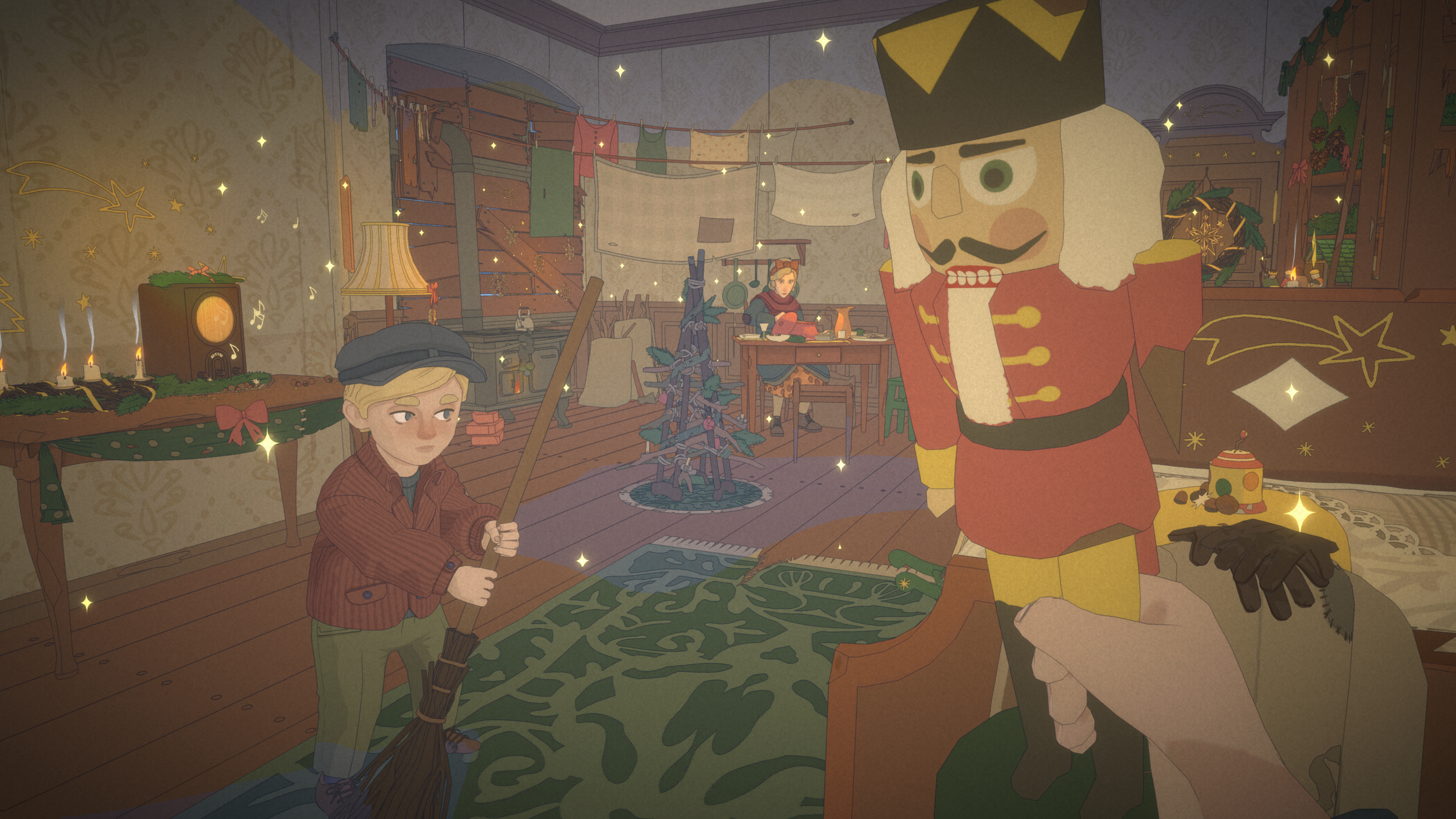
Image: Blue Backpack
If I just give you the date of the third chapter – 1945 (and, specifically, Christmas 1945) – then I doubt you need me to tell you that it’s probably the most heavy of the four stories, even with what you know about the previous chapter. The war is over, but Berlin is looking very much worse for wear, and for reasons that’ll become obvious, your three-person family is confined to just one of the apartment’s rooms.
It is, by some margin, the shortest of the stories: the other three clocked in at around 40 minutes each for me, this one took less than half that. That alone led to me feeling a little short-changed by the chapter, particularly given that it’s probably the one that jumps out as having the most potential for impact. Its themes are interesting but not really explored – players are given a very similar task to the one they undertake in the 1933 chapter, but this time the objects don’t carry the same emotional attachment: your character is effectively just collecting things she thinks look pretty. While a lot of these items do offer a dismal insight into the situation at the time, they’re forgotten almost as soon as you discover them – you’ll get a line of dialogue and that’s about it – and then the chapter fizzles out while hanging onto a piece of (I think) humour which feels wildly out of place with the rest of the scene.
For me, regardless of its tone, that ending came too abruptly, and I would’ve liked to have had more time to learn about these characters. It's the only time you’re not alone in the apartment, pets not included, but there’s no opportunity for players to discover more about the relationships between them or to properly understand who these people are before they’re back with Dilara and Malik.
1967: Interferences from Orbit
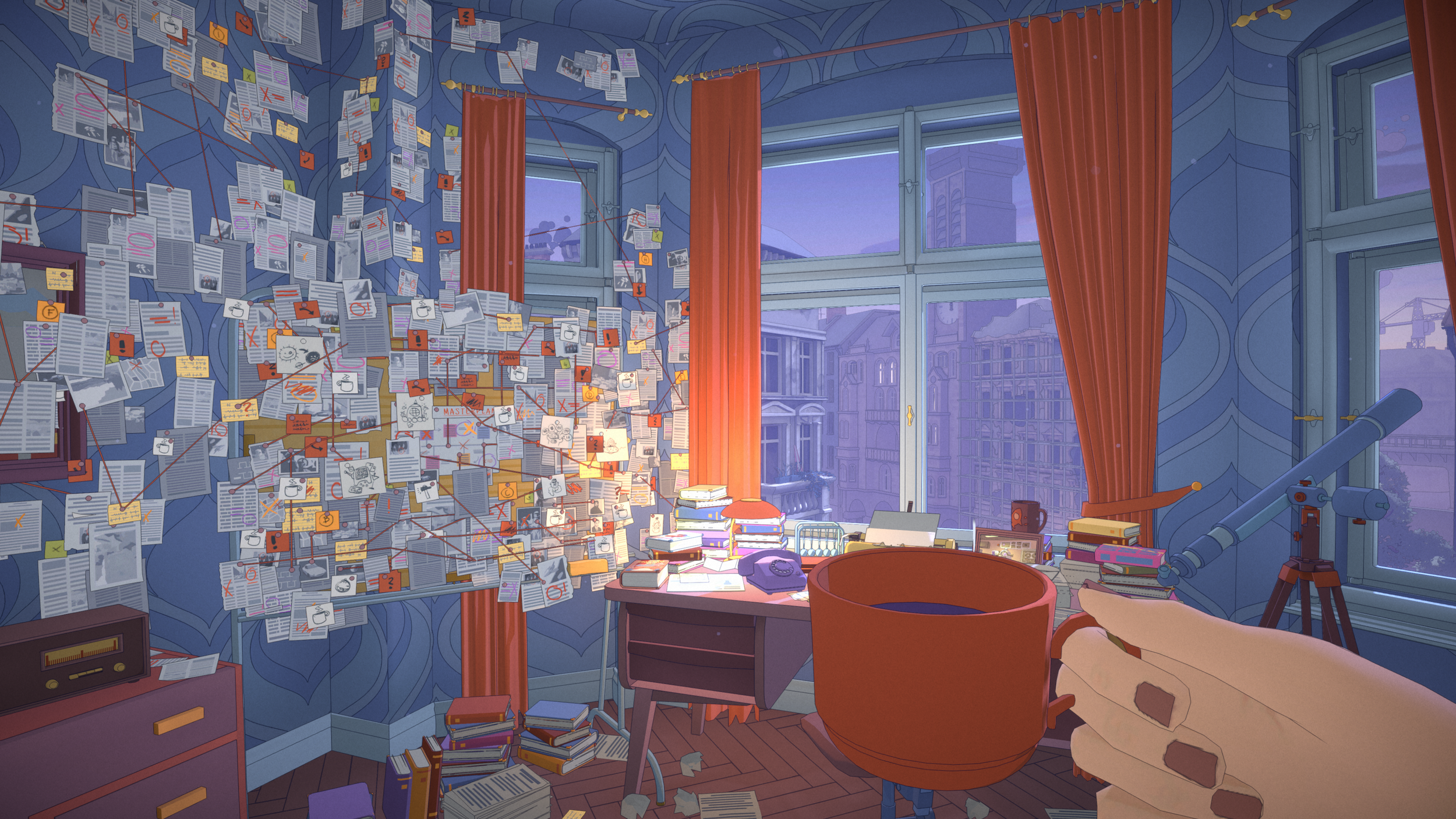
Image: Blue Backpack
The final chapter is perhaps the most polarising: I know I said there wasn’t much consensus on the best and worst stories but a lot of what I’ve seen suggests that people either loved or hated this one. I think that’s largely on account of it breaking the formula: you’ve spent the previous three chapters constrained within the apartment – which is perhaps the one rule that’s been established – but here in 1967, in the final story, you leave it.. in a way.
It changes things further by granting the player some autonomy that’s not really present in the other chapters: while there are very minor decisions made throughout the game – and, indeed, within this chapter – they don’t feel like ‘big’ choices, but here you have to make one that will likely change the trajectory of its protagonist’s life. While you’re able to imagine what might’ve happened to the three other characters after their snapshots finish, you don’t have any say in those, but here you choose which of two paths Toni takes. Even though you don’t see how that decision plays out for her, it does a good job of making The Berlin Apartment feel more like a game rather than a story without any player agency: there isn’t much narrative room for it in the other chapters, but I’m glad that the game closed out with one where players can feel like they had an impact.
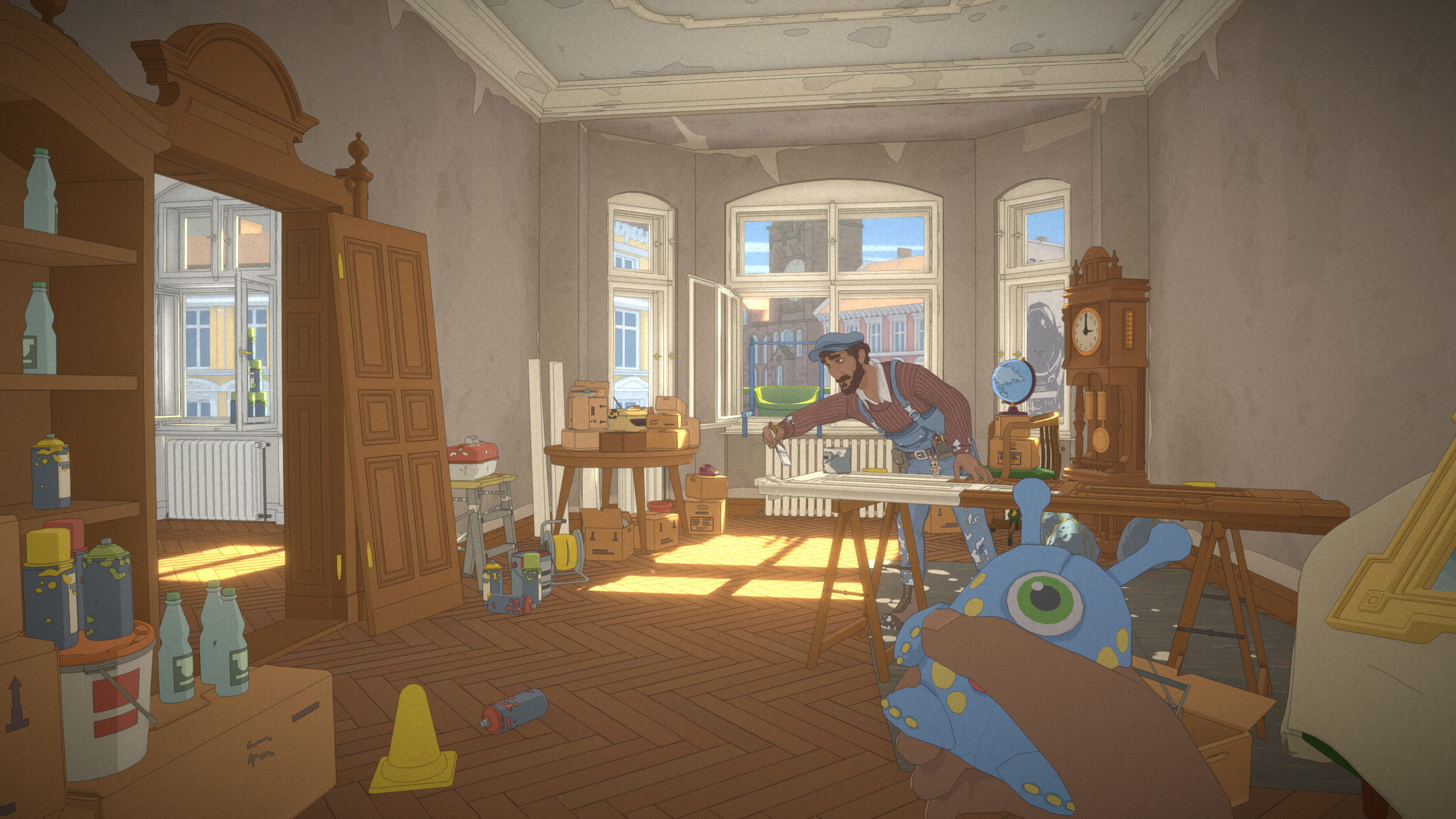
Image: Blue Backpack
Initially I was a bit bothered by the fact that the four chapters don’t really link together in a meaningful way; that they feel like four different stories written by entirely different people – but when I think on it a little more, that makes complete sense. These are four very different characters, after all. If you think about where you’re reading this article right now and I ask you who was living there a hundred years ago, or sixty, or even thirty, I’m not sure you’d be able to answer — I certainly couldn’t for any of the places I’ve lived, save my childhood home where my parents still live. For most of them I’ve no idea who was even there immediately before me; and The Berlin Apartment certainly got me wondering.
I try not to make a habit of talking about prices, but I do feel that here it’s a little steep: it’s a good game and one that I’d easily recommend if money were no object, but I’m not sure it fully justifies its 25 euro (or dollar) price tag. It’s a topic for another time, but I think most indies are actually pretty under-priced when compared with either AAA games or just other forms of entertainment, but it does mean that, within its market, The Berlin Apartment, struggles to hold up against the competition. While it’s doing something unique and so it’s difficult to make any like-for-like comparisons, given its short runtime I’d want something that pushes towards Game of the Year territory, and while I think the ingredients were there for it to do that, in the end it doesn’t quite reach those heights. There’s a lack of polish which also takes the edge off – things like doors clipping through furniture being one of the first things I encountered, fairly obvious typos, and smashed tiles making the game lag considerably (although that last one might’ve since been patched), would feel more forgivable in a game at a lower price point.
I don’t want to be too harsh on it based on my own lofty expectations and the fact that I think it had such fantastic potential – I do maintain that it’s a good game, and were it cheaper I’d excuse those relatively minor issues to the point that they’d probably not even get mentioned. Ultimately, it's a worthwhile title but a hard sell: I worry that it won’t be experienced by as many people as it deserves on account of that. The Berlin Apartment is awarded 7.5/10 by IndieLoupe.com
The reviewed product was provided on behalf of the publisher.
