
Review: Schrodinger's Cat Burglar
Schrodinger's Cat Burglar from Australian developer Abandoned Sheep had been on my radar for a little while because… y'know, cute cat, but I can't say I actually knew much more about it than what I've already told you: that it's got a clever name, that it's got a cute protagonist, and that it's got portal-like mechanics. It turns out it would be incredibly reductive to say that's all you need to know about this one, but as far as elevator pitches go I think you'd do well to find a stronger one than this little guy has to offer.
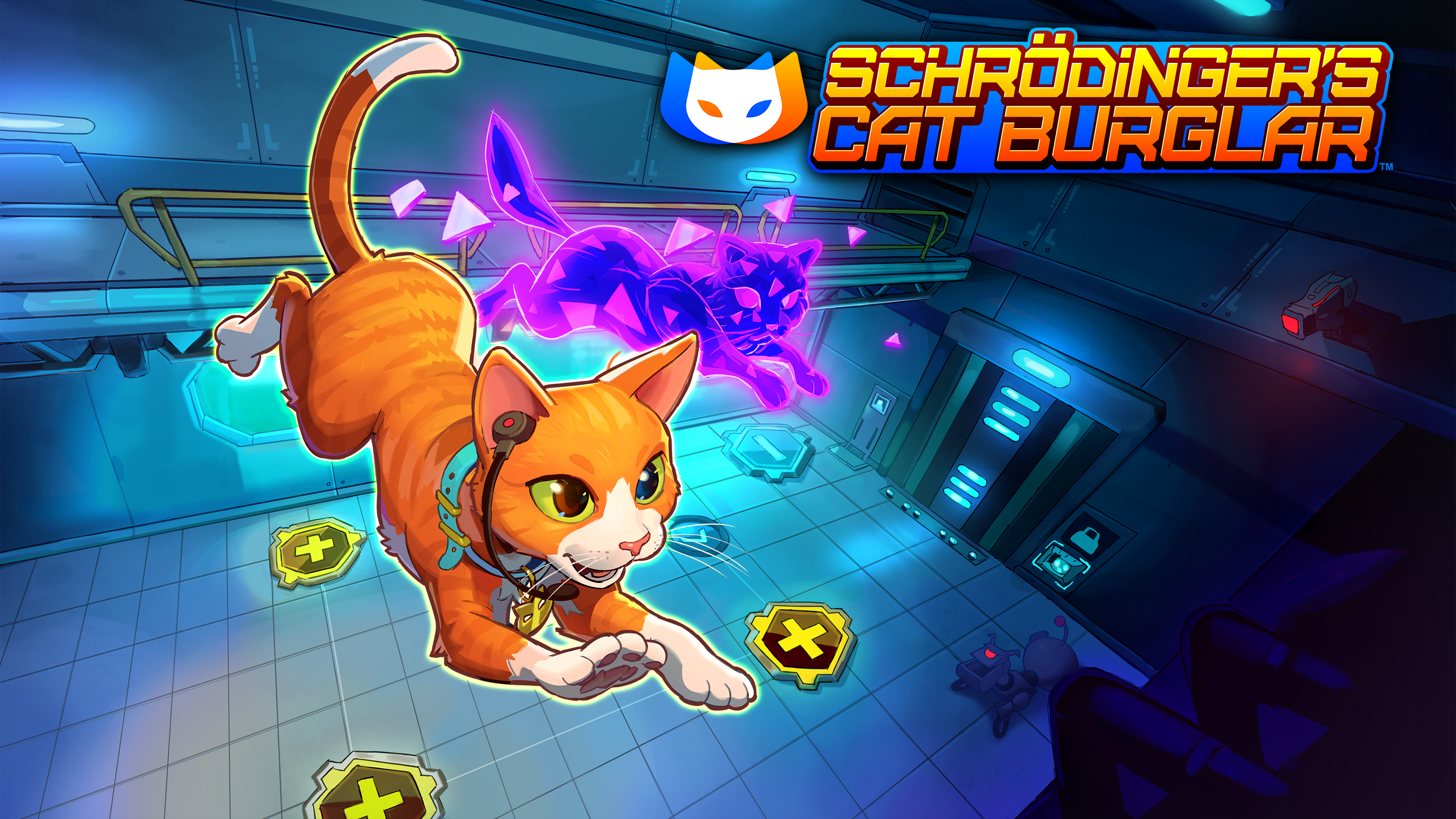
Image: Abandoned Sheep
-
Developer: Abandoned Sheep
Publisher: Abandoned Sheep
Release: 21 May 2026
Retail Price (Steam): 20,49€/$19.99/£17.75
In Schrodinger's Cat Burglar you play as Mittens, a cat who is a burglar. Two-thirds of the title covered. You've been hired by an anonymous client to steal incriminating evidence from the computer network of a shady company – Flagranté-Johan – whose two areas of expertise are, in a Michelinesque state of affairs, plumbing and data processing. Unfortunately for Mittens, the mission doesn't go quite as planned, and she finds herself apprehended (by a robot dog, naturally) and thrown into a mysterious underground facility. Luckily she can still communicate with her brain-box hedgehog-in-the-chair Lazy Susan while she works towards what must be a fairly straight-forward goal: escaping the facility with all nine of her lives intact.
If anonymous tip-offs and secret underground bases weren't enough to suggest that something peculiar – or, according to that tip-off downright evil – was afoot, there's also a 'weird shadow-y cat thing' that Mittens keeps catching out of the corner of her eye, and whether it is friend or foe is unclear.
After a small amount of meandering through various corridors, offices and air vents, Mittens arrives upon the observation deck for a machine that appears altogether more noteworthy than everything else she's encountered so far (creepy purple ghost cats notwithstanding), and it seems the only way out involves going over a walkway that passes right through that machine. Despite Lazy Susan's reassurances, the machine is not quite as inactive as it looks, and, perhaps with a little help from that other mysterious feline, it whirls into action the second Mittens steps within its reach.
So begins the game proper: a few moments later and Mittens wakes up with double vision… and double everything else, having been granted the ability to split herself into two different cats. Or the same cat, in two different places. Controlling those two versions of Mittens is the core mechanic through which the game's many puzzles operate, starting simply with your typical 'Cat-A stands on pressure plate so Cat-B can go through door' sort of deal but quickly developing into something considerably more complex.
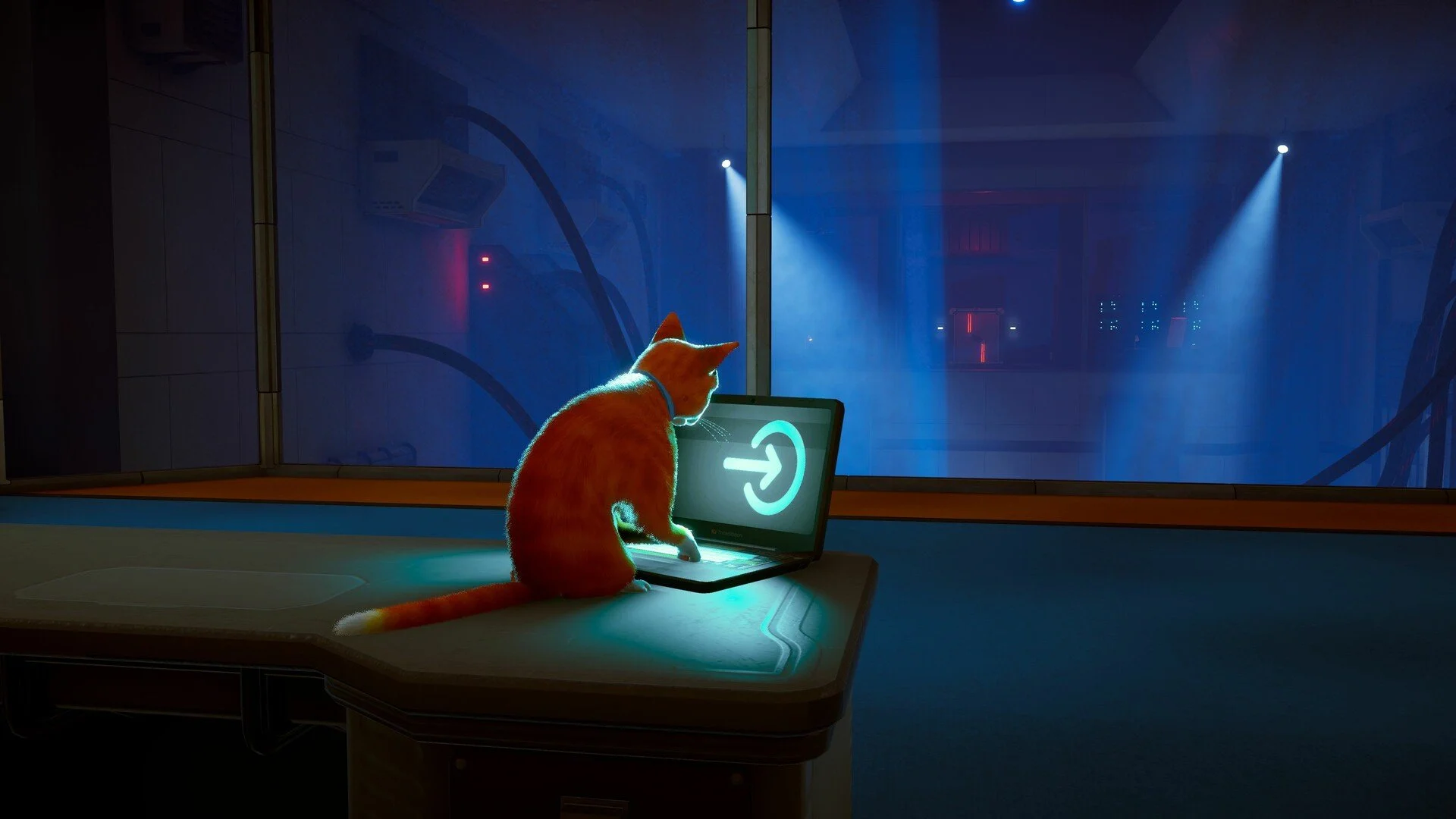
Image: Abandoned Sheep
So 'Portal with Cats' – that's the snappy tagline, it's what I opened with, it's what on the game's Steam page, but now that I've got you here I'm actually going to push against that a little bit. The fact that it's a puzzle platformer is obviously a pretty big similarity, albeit a fixed-perspective one rather than first-person, and the game leans into the Portal comparison with its orange-blue colour scheme and 'secret science facility' setting, and I guess those are quite big similarities, but other those it's not got all that much in common – the distinct lack of portals being the most obvious place to start.
But I also have a bigger issue with 'Portal with Cats' which is that I think it vastly undersells how much game there is here. I like to go into games without knowing what to expect, and I think Schrodinger's Cat Burglar has done a good job of hiding its twists and turns – nothing annoys me more than a game with images on its Steam page that give away its biggest moments – but I went in expecting a relatively short experience with minimal story.
Perhaps that's me taking things a little too literally, but I was pleasantly surprised when the game took over ten hours to complete. There was quite a bit of exploration included within that, I'd run through any extra side-puzzles that I was presented with, but there's still a lot that I'd need to go back and do if I wanted to be a completionist and collect everything the game has to offer. Also, as fantastic as Portal is, it's more-or-less the same trick repeated over and over; that's fine for a game that takes less than two hours, but wouldn't work here. Instead the parallels with Portal 2 are arguably a lot more prominent: a simple mechanic, which gets expanded upon and reiterated throughout the course of the game.
Again, maybe that's me taking it a bit too literally, and I suppose 'Portal 2 with Cats' doesn't exactly roll off the tongue, but in terms of length – and dare I say the amount of story and lore that has gone into the game – I think that's a better way to look at it. Without proffering spoilers, the game went much further than I was expecting it to, and unpacking the mystery through the various emails and documents I found throughout my playthrough was, for me, very satisfying. On the other hand, if you're not particularly interested in that and just want to smash through the game's puzzles, it's unimposing enough that you've got the freedom to do that, and can still follow along with the biggest story beats without missing out on much.
There was one moment in particular that pulled surprisingly hard on the heartstrings, which I'll admit was heavily aided by the game's excellent soundtrack. That's usually a bouncy sort of 'spy-fi' music, but in the moment I'm talking about, was a lot more sombre. In either instance, it really helps set the mood, so big props to Oliver Horton who is credited for the game's music.
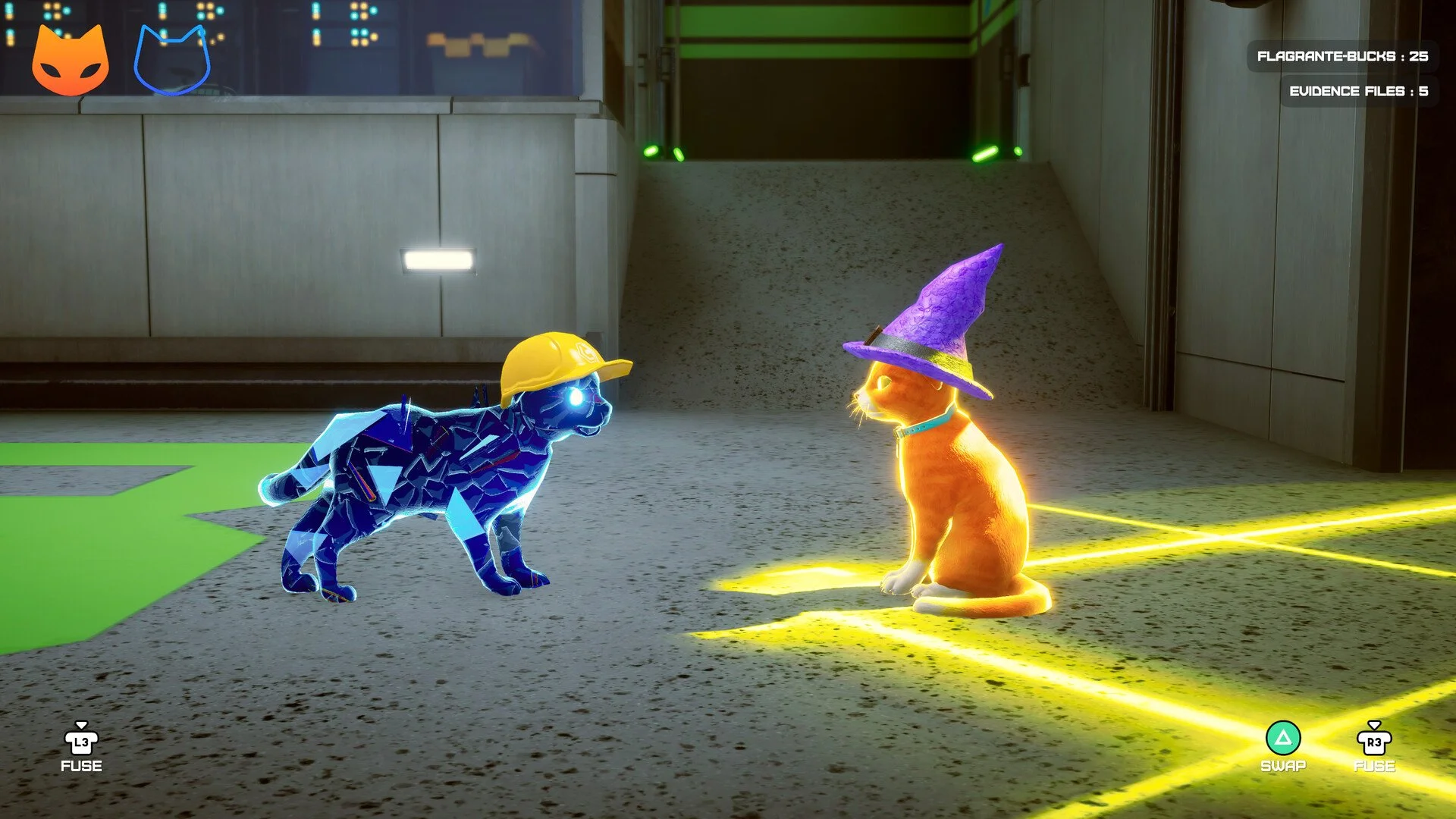
Image: Abandoned Sheep
As mentioned, the core gameplay is centred on the mechanic of splitting Mittens into two different versions of herself in order to solve puzzles. That begins with some relatively simple logic, but the game introduces a lot of mechanics that keep things fresh.
I found discovering those new mechanics to be a really fun part of the game, so I don't want to give too much away, but I'll give you one example, which also explains the remaining third of the game's title: the 'Schrodingers' aspect, where, if one of your versions of Mittens is observed by a camera, the other one becomes hypothetical: it can't exist in the real world because the actual position of Mittens is 'known'. That means it can't pick up items, pull levers or push buttons, but also allows it to phase through objects to places that would otherwise be unreachable.
As with all the new abilities you get throughout the game, that skill is added to Mittens' repertoire and will often need to be used in conjunction with others in order to solve the game's later puzzles.
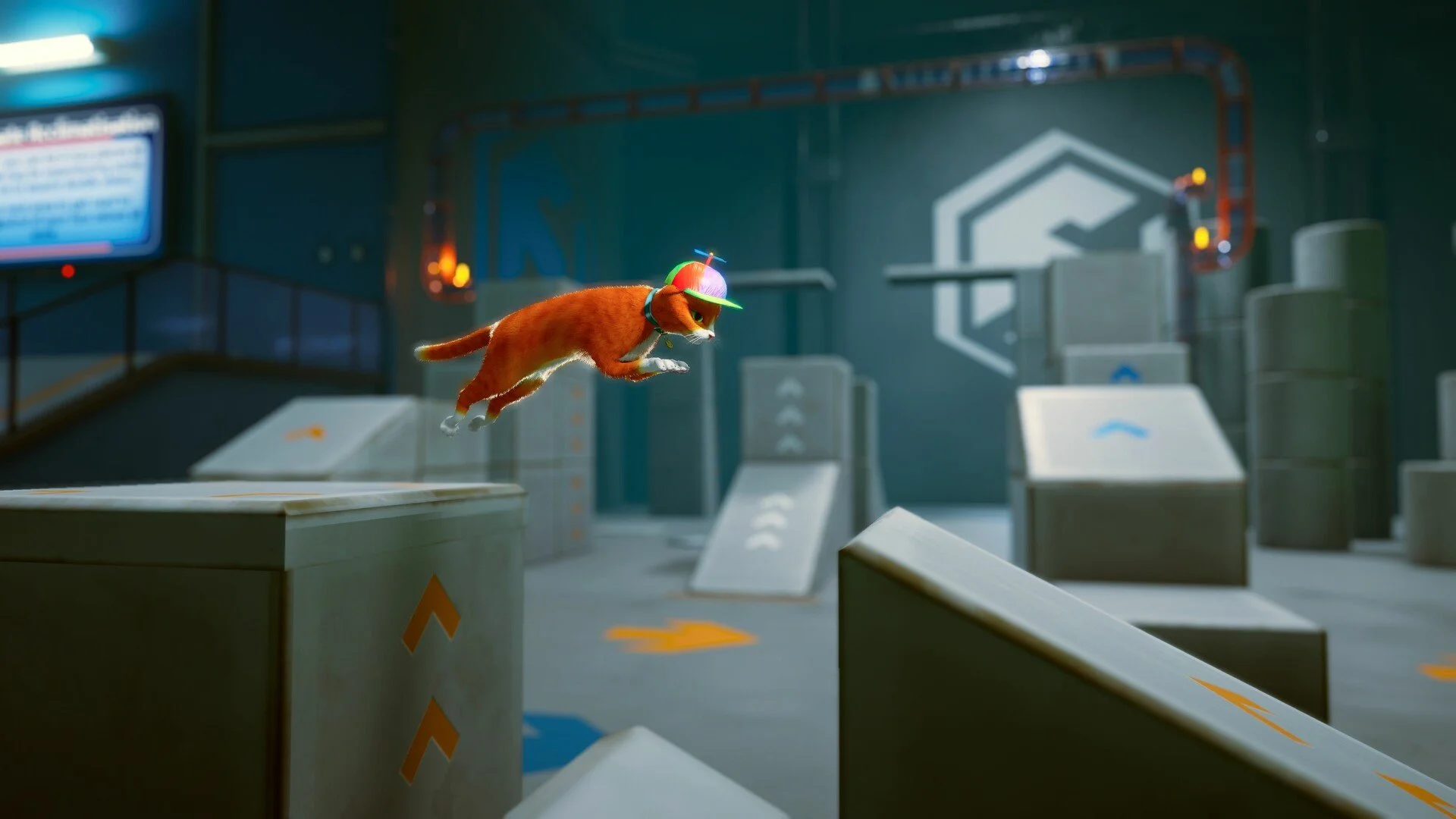
Image: Abandoned Sheep
If you're anything like me, you might be questioning how easy it is to control two characters at once and, honestly, except for the handful of occasions where it was compulsory to move both cats at the same time, I probably wasted more time than I saved whenever I tried to do that. Your mileage may vary, but if you think you're bad at multitasking and want to reinforce that theory, then Schrodinger's Cat Burglar might well help you to do that.
Luckily, for the vast majority of puzzles you can move your cats independently and solve them without it causing any issues, and there are accessibility options available that slow down elements of the game that have a timing requirement, should players need to use them. I think if I heard there were timed aspects without having played the game I might be a little put off so I want to drive home the point that those really are few and far between, and by the time players encounter them they've had a lot of time to get used to the controls – by that point they probably aren't bumping the cats into walls trying to get through the most simple of doors.
It's worth mentioning that there is also a local co-op mode, which – unsurprisingly given the premise – I imagine would work wonderfully, though I didn't experiment with it myself.
In terms of the puzzles themselves there were certainly a few times where I had to sit back and have a good think, but largely I found them to tend a little easier than in similar games – which feels appropriate for the game's aesthetics and theme. I think it's very rare for a game to be enjoyable on a similar level for both adults and (older) children, but I think Schrodinger's Cat Burglar accomplishes that: my own kids are a bit young for it right now but I could definitely see a nine or ten year-old really getting into it – with some assistance.
There was an occasion or two that I felt I was going through the motions a little bit, but I think that happens in almost any longer puzzle game, and it mainly occurred with optional content, where I was back-tracking through a level to try and get some pick-up that wasn't necessary to progress further. Those pick-ups are used to purchase a wide variety of customisations for your cats which, while I'll admit was not much of a consideration for me, is nice to have, and allows players to personalise their Mittenses to their hearts content.
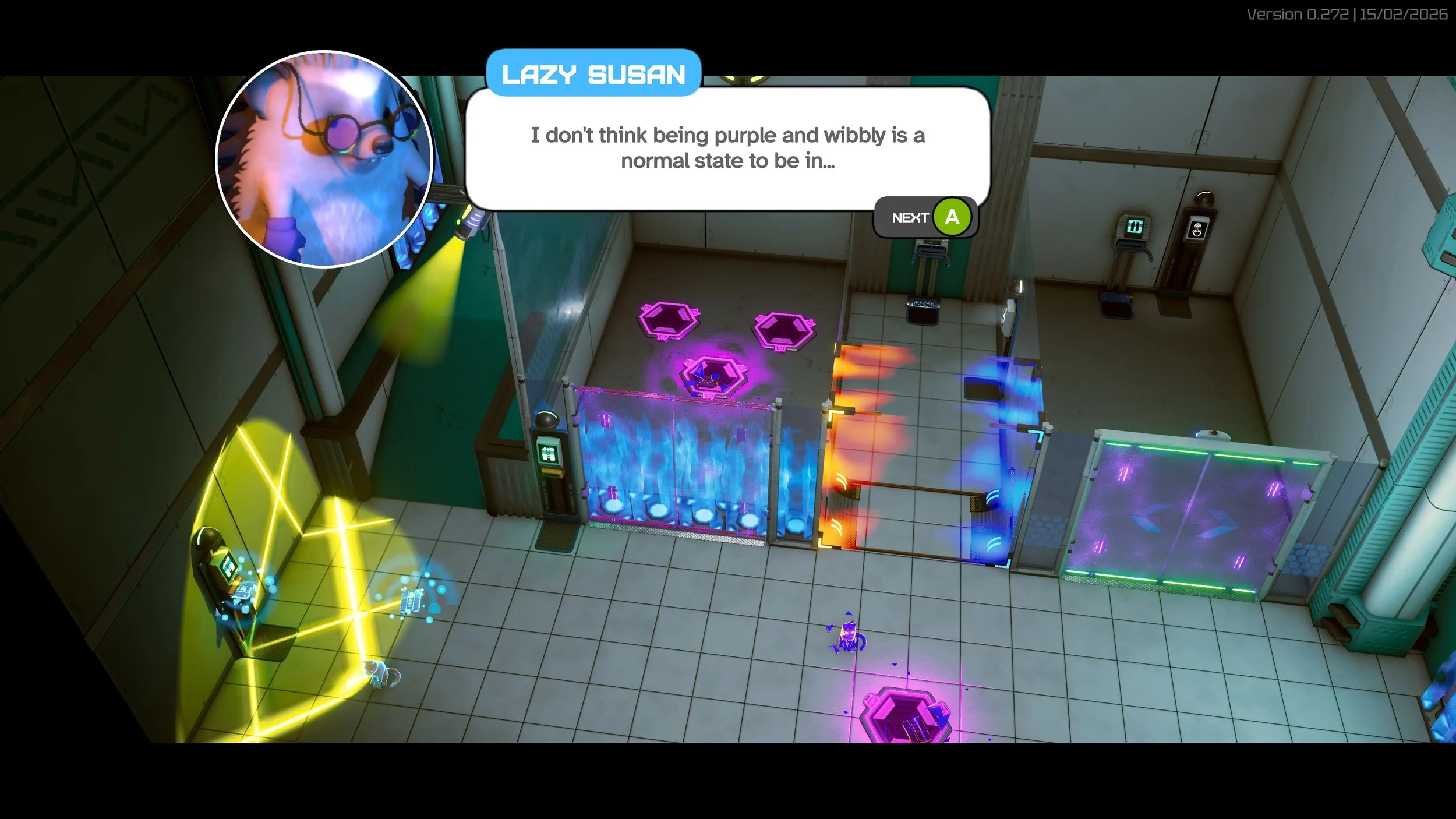
Image: Abandoned Sheep
Schrodinger's Cat Burglar offered plenty of surprises, both in terms of the sheer amount of content it had and how heartfelt some of that content was. And, with an ending that suggests there will be more to come, I'm very much looking forward to seeing where Abandoned Sheep go next with Mittens and Lazy Susan.
Schrodinger's Cat Burglar is awarded an 8.5/10 by IndieLoupe.com.
The reviewed product was provided on behalf of the developer.
